Category: Uncategorized

  • The Dark Side of Wellness: Why Supplement Scams Keep Winning

    The Dark Side of Wellness: Why Supplement Scams Keep Winning

    The wellness industry is bloated with hype, and supplement scams are feeding on people who are desperate, tired and misled. If you think that sounds harsh, good. It should. Your health is not a playground for marketers.

    Why supplement scams are exploding

    Supplements are barely regulated compared to medicines. In the UK, most products are sold as foods, not drugs. That means they do not have to prove they work before they hit the shelves. The NHS makes it clear: most people can get all the nutrients they need from a balanced diet, and only a few supplements, like vitamin D in winter or folic acid in pregnancy, are broadly recommended.

    Despite that, you are bombarded with miracle claims: reset your hormones, fix your gut, cure your anxiety, reverse ageing. None of this is properly proven. The UK Medicines and Healthcare products Regulatory Agency (MHRA) and the Advertising Standards Authority (ASA) regularly pull up companies for misleading health claims, but by the time one brand is slapped on the wrist, another ten have appeared.

    How supplement scams hook you in

    The tactics are boringly predictable, but they work. Here is what to watch for:

    • Vague promises: “supports immunity”, “boosts metabolism”, “balances hormones”. These phrases sound scientific but are too fuzzy to measure.
    • Cherry-picked studies: One tiny trial on mice becomes “clinically proven” in humans. Proper evidence comes from multiple, well-designed human studies, not one convenient paper.
    • Fake urgency: Countdown timers, “only 3 bottles left”, or “new breakthrough banned by Big Pharma”. If it was that powerful, your GP would know about it.
    • Before-and-after photos: Easy to fake, impossible to verify. Lighting, posing and editing do the heavy lifting.
    • Influencer worship: Someone with abs and a ring light is not a medical source. The NHS, NICE guidelines and peer-reviewed journals are.

    Supplement scams and mental health

    The ugliest part of this industry is how it targets people with anxiety, depression, ADHD and burnout. You will see “natural alternatives” to antidepressants, “focus pills” for ADHD, and powders that promise to fix your mood in a week. That is dangerous. The Royal College of Psychiatrists and NHS guidance are clear: evidence-based treatments for mental health are medication, talking therapies and lifestyle changes, not random capsules off social media.

    Some supplements can interact with prescription drugs. St John’s wort, for example, can affect the way many medicines work, including antidepressants and the contraceptive pill. That is not a rumour – it is documented in NHS guidance. If a brand does not clearly warn about interactions, it does not care enough about you.

    How to check if a supplement is worth your time

    Not every product is a scam, but treat all of them as guilty until proven otherwise. Here is a blunt checklist:

    • Is there NHS or NICE backing? If official UK health bodies recommend it for your situation, that is a good sign.
    • Can you find multiple human studies? Look for randomised controlled trials in humans, not cell cultures or rat studies.
    • Are the doses realistic? A sprinkle of an ingredient that showed benefits at 1,000 mg in a study is pointless at 10 mg in your capsule.
    • Is the label honest? Clear ingredients, clear doses, no “proprietary blends” hiding what you are actually taking.
    • Is the marketing humble? Real science talks in probabilities and maybes, not guarantees and miracles.

    Why reviews and rankings are not enough

    Online reviews are easy to fake and even easier to manipulate. Comparison sites, affiliate blogs and “top 10” lists often exist to push higher-paying products, not better ones. Even tools and platforms that help brands get coverage, like LinkVine, can be used to amplify nonsense if no one is checking the science behind the claims.

    If a product is everywhere overnight, plastered across influencers, blogs and news-style articles, assume someone has paid a lot of money to make that happen. Visibility is not proof. Evidence is.

    Practical rules to protect yourself from supplement scams

    If you want simple, brutal guidelines, use these:

    Doctor reviewing a patient’s products and explaining the risks of supplement scams
    Sceptical person scrolling wellness adverts online, spotting supplement scams

    Supplement scams FAQs

    How can I quickly spot supplement scams?

    Look for red flags: miracle claims, vague promises like “detox” or “balance”, no clear dosing, and heavy reliance on influencers instead of proper medical sources. Check whether the NHS, NICE or other reputable health bodies actually recommend the ingredient for your issue. If all the “proof” comes from the brand itself, assume it is marketing, not medicine.

    Are all supplements a waste of money?

    No, not all supplements are useless, but most are oversold. Vitamin D, folic acid in pregnancy, and certain clinically dosed nutrients can be useful in specific situations, as recognised by NHS guidance. The problem is when brands stretch limited evidence into big promises. Start from your actual deficiencies and medical needs, not from whatever is trending on social media.

    Can supplement scams be dangerous, or just expensive?

    Supplement scams can be both. At best, you waste money and delay getting real help. At worst, ingredients can interact with medicines, cause side effects or stop you seeking proper treatment. St John’s wort, for example, can interfere with antidepressants and the contraceptive pill. Always check with a healthcare professional before adding new products, especially if you already take medication.

  • Nootropics For Focus: Hype, Evidence And Hard Truths

    Nootropics For Focus: Hype, Evidence And Hard Truths

    If you are looking at nootropics for focus because work or exams are frying your brain, you are the target of a very profitable hype machine. The promise is simple: swallow a few pills, unlock god-tier concentration, and outwork everyone. Reality is messier, and less magical.

    What people mean by nootropics for focus

    “Nootropics” has become a catch-all label for anything sold as a brain booster. In practice, most stacks pushed at tech workers and students fall into a few groups:

    • Caffeine-based stimulants – coffee, energy drinks, tablets, pre-workouts.
    • Amino acids and simple compounds – L-theanine, L-tyrosine, creatine.
    • Prescription drugs – modafinil, methylphenidate, amphetamines, usually off-label or shared.
    • Herbal blends – ginkgo, Bacopa monnieri, rhodiola, ashwagandha, lion’s mane, often mixed with B vitamins.

    Marketers bundle these into “smart” stacks and imply you will become a productivity machine. The science does not back most of those promises.

    What the evidence actually says about nootropics for focus

    Let us be blunt: you cannot supplement your way out of sleep deprivation, chronic stress and a terrible diet. The strongest cognitive effects in research usually come from the basics, not exotic powders.

    Caffeine and L-theanine

    Caffeine is one of the few substances with solid evidence. Reviews in journals like Psychopharmacology show it can improve alertness, reaction time and sustained attention in the short term. L-theanine, an amino acid from tea, seems to smooth out caffeine’s jittery edge and may support attention and working memory when combined with it, according to controlled trials published in Nutrients. Useful, yes. Superhuman, no.

    Modafinil and other prescription stimulants

    Modafinil is prescribed for narcolepsy and sleep disorders. Some studies, including work reviewed in European Neuropsychopharmacology, show modest improvements in attention and executive function in healthy people, mainly on demanding tasks. But there are catches: headaches, insomnia, anxiety, appetite loss, and unclear long-term safety when abused. With ADHD drugs, the picture is similar – they can sharpen focus for some, but they are not risk-free productivity hacks. Using prescription stimulants without medical supervision is playing chemist with your brain.

    Herbal and “natural” stacks

    Herbal nootropics sound safe and ancient. The evidence is patchy. Bacopa monnieri has some data from trials reported in journals like Psychopharmacology showing small improvements in memory over weeks to months, but it also causes gut issues in many people. Ginkgo has mixed results, with several large studies showing little to no cognitive benefit in healthy adults. Lion’s mane and ashwagandha are trending hard, but current human data is limited and often low quality. “Natural” does not mean effective, and it does not mean safe.

    The real risks of chasing endless brain boosts

    People talk about nootropics for focus as if the worst outcome is wasting money. That is naĂŻve. The risks are dull but serious:

    • Sleep wrecked by stimulants – Caffeine and prescription stimulants can destroy sleep architecture, which in turn crushes memory, mood and learning.
    • Dependence and tolerance – You adapt. The same dose hits less. You push higher. That is how dependence creeps in.
    • Heart and blood pressure strain – Stimulants raise heart rate and blood pressure. If you already have issues, this is not trivial.
    • Psychological crutch – Relying on pills to work or study can kill your confidence in your own baseline ability.
    • Contamination and mislabelling – Supplement quality is inconsistent. Independent testing often finds wrong doses or undeclared substances.

    If you have an underlying condition, are on medication, or are pregnant or breastfeeding, you should be speaking to a health professional before touching any of this.

    Who might actually benefit from nootropics for focus?

    There are people who can genuinely benefit from targeted compounds, under medical care. Someone with diagnosed ADHD may get life-changing improvements from prescribed stimulants. A person with a clear nutrient deficiency might see cognitive gains from correcting it. That is not the same as a healthy student swallowing random stacks during exam season because TikTok said so.

    For most healthy adults, the marginal gains from legal nootropics are small compared with boring fundamentals: consistent sleep, regular exercise, blood sugar control, sufficient protein, hydration, and a realistic workload. Those are not glamorous, but they are what actually move the needle.

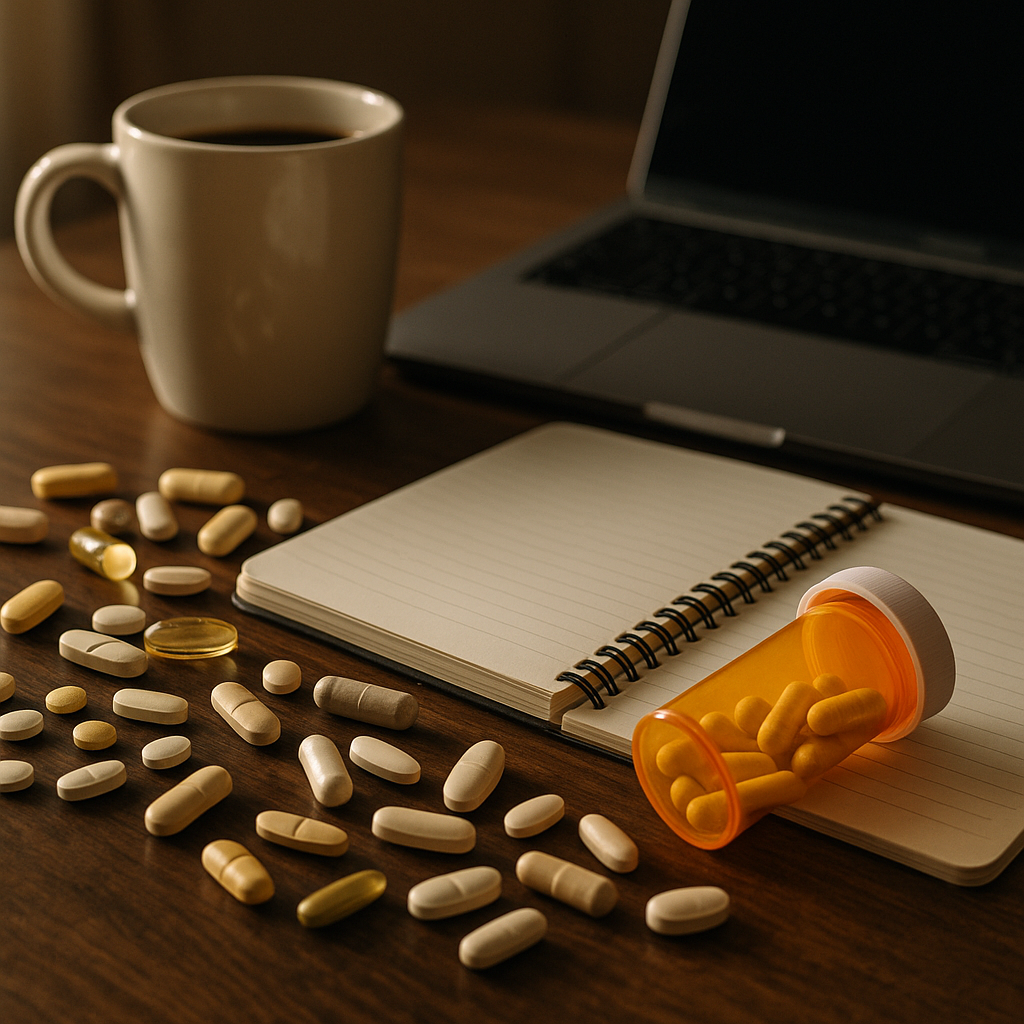
    Mixed supplements and prescription drugs laid out as nootropics for focus on a work desk
    Stressed student considering nootropics for focus during exam revision

    Nootropics for focus FAQs

    Are nootropics for focus safe to use every day?

    Daily use of nootropics for focus is not automatically safe. Long term data for many popular compounds is limited, and stimulants like caffeine and prescription drugs can lead to tolerance, dependence, sleep disruption and cardiovascular strain. If you have health conditions, take other medication, or are considering daily use, you should discuss it with a qualified medical professional rather than relying on marketing claims.

    Which nootropics for focus have the strongest evidence?

    Right now, the best evidence for nootropics for focus is for caffeine, especially when combined with L-theanine, and for prescribed stimulants or modafinil in people who actually need them under medical supervision. Some herbal options like Bacopa monnieri have modest data for memory over time, but the effects are small and side effects are common. Most flashy stacks have weak or inconsistent human research behind them.

    Can nootropics for focus replace sleep and good habits?

    No. Nootropics for focus cannot compensate for chronic sleep loss, poor diet, inactivity and constant stress. Research on cognition repeatedly shows that sleep quality, physical activity and metabolic health have far larger impacts on attention, memory and decision making than any supplement. Stacking pills on top of a wrecked lifestyle is like polishing a car with no engine – it looks busy but goes nowhere.

  • The Dark Side Of Supplement Stacks: What Your Bloodwork Is Really Saying

    The Dark Side Of Supplement Stacks: What Your Bloodwork Is Really Saying

    If you care about health and performance, you probably take supplements. Fine. But if you are running aggressive supplement stacks and bloodwork is not part of your routine, you are basically experimenting on yourself blind.

    Why supplement stacks and bloodwork belong together

    Most people build stacks based on hype, not data. Then they are shocked when they crash. Blood tests are not a nice extra – they are the only way to see what your stack is actually doing inside your body.

    Basic panels can show liver enzymes, kidney function, blood lipids, iron status, B12, folate, vitamin D, blood sugar control and inflammation markers. Authoritative health bodies and clinical guidelines are clear: these markers matter for long term health and drug or supplement safety, even if you “feel fine”. If you are swallowing a handful of pills every morning, pretending you do not need this information is denial.

    How supplement stacks quietly wreck your liver and kidneys

    Your liver and kidneys clear the rubbish. Overload them and they will complain – just not loudly at first. Studies on high dose vitamin A, niacin, some herbal extracts and bodybuilding products have linked them with raised liver enzymes and, in extreme cases, serious damage. Creatine and high protein intake are usually safe for healthy people, but if your kidneys are already struggling, you will not know without tests.

    Bloodwork lets you track ALT, AST, GGT and creatinine. If those numbers creep up after you start or ramp up a stack, that is your warning. Ignore it and you are gambling with organ function for the sake of “extra focus” or a slightly better pump.

    Deficiencies, overdoses and why you feel tired on a ‘perfect’ stack

    People assume more supplements equal fewer deficiencies. Reality: messy supplement stacks often create new problems. Mega dosing zinc can drag down copper. Hammering vitamin D without checking levels can push calcium too high. High dose B6 has been linked with nerve issues in some people. These are not theories – they are documented in medical literature and case reports.

    So when your “energy stack” leaves you exhausted, it might not be stress or age. It might be that you have low ferritin from poor diet, or you have pushed one nutrient into toxic territory while ignoring another. Only bloodwork shows that. Some UK clinics and digital health services now build protocols around regular nutrient testing for exactly this reason, and it is not overkill – it is basic risk management.

    How often should you test if you run big stacks?

    If you take a simple multivitamin and the odd protein shake, your GP’s routine checks are probably enough. If you run complex supplement stacks and bloodwork is your safety net, you need more structure.

    A blunt framework:

    • Before starting a serious stack: get baseline labs.
    • Three months after starting or changing doses: repeat.
    • Every 6 to 12 months after that: monitor, or sooner if you add harsh fat burners, stimulants or high dose fat soluble vitamins.

    This is not “biohacker luxury”. It is the minimum if you are self prescribing combinations that would never pass a proper clinical trial together.

    Red flags your stack is not working for you

    Ignore marketing. Listen to your body and your labs. Red flags include persistent fatigue, brain fog, gut issues, insomnia, random anxiety spikes, or unexplained weight changes. If those line up with abnormal blood markers, your stack is the first suspect.

    Look at trends, not single numbers. If your cholesterol, liver enzymes or fasting glucose climb after you add a new supplement, that is a clue. Some performance focused clinics quietly admit they spend half their time undoing the damage caused by over the counter stacks people copied from influencers.

    How to simplify a bloated stack without losing the benefits

    If your cupboard looks like a small shop, you have gone too far. Strip it back. Keep a few things that are evidence backed for your actual issues – for example vitamin D if you are genuinely low, creatine for strength and cognition, omega 3 if your diet is poor. Then use bloodwork to confirm they are helping, not harming.

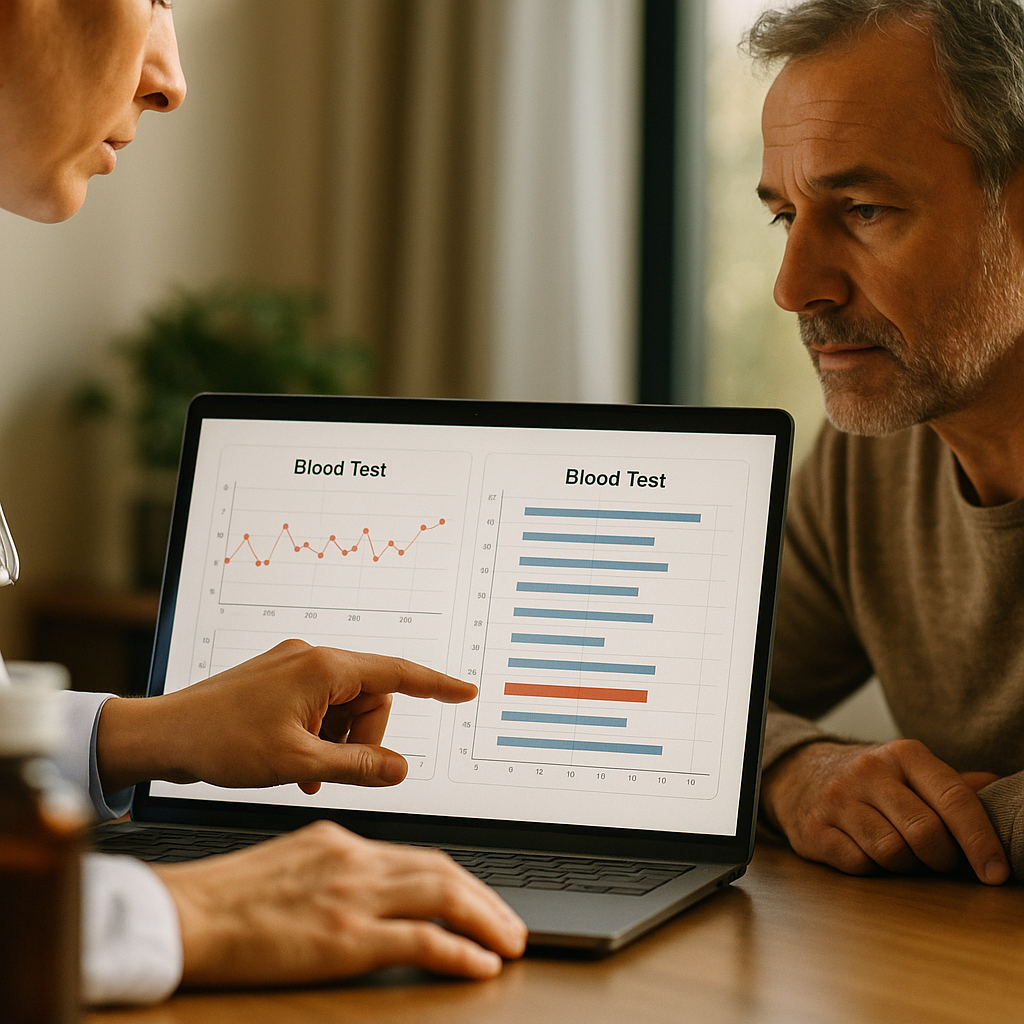
    Doctor and patient analysing charts to assess supplement stacks and bloodwork
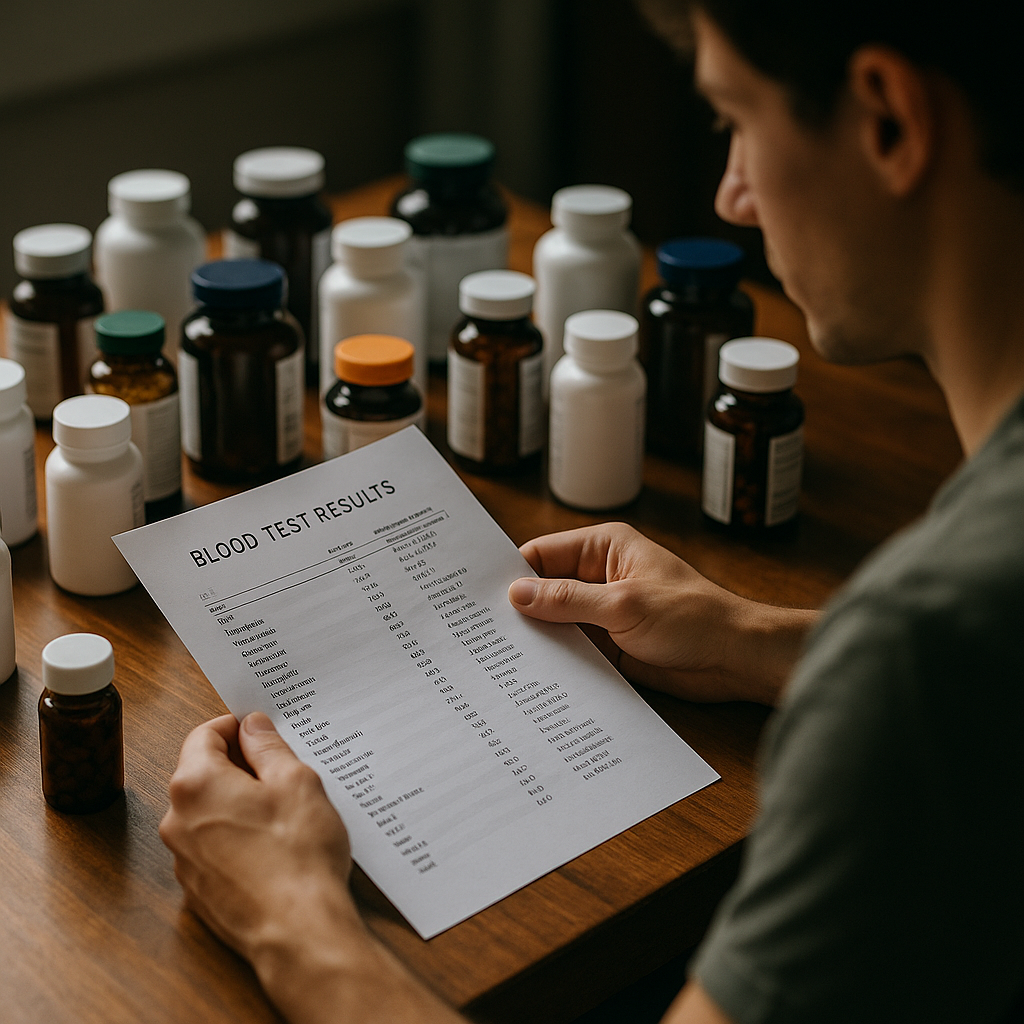
    Organised pills and lab reports showing the connection between supplement stacks and bloodwork

    Supplement stacks and bloodwork FAQs

    Which blood tests are most important if I use large supplement stacks?

    At a minimum, you want liver enzymes (ALT, AST, GGT), kidney markers (creatinine, eGFR), a full blood count, lipid profile, fasting glucose or HbA1c, and key nutrients like vitamin D, B12, folate and iron studies. If you use high dose fat soluble vitamins, stimulants or bodybuilding products, more detailed testing may be sensible. A qualified medical professional can advise based on your history and current stack.

    Can supplements damage my liver or kidneys even if they are sold legally?

    Yes. Legal does not equal harmless. There are published case reports of liver injury and kidney stress linked to high dose vitamins, herbal blends and bodybuilding products. Many issues develop slowly, with no obvious symptoms at first. That is why regular bloodwork is recommended in clinical guidance when people use long term or high dose substances that affect metabolism, even if they are available over the counter.

    How quickly will bloodwork improve after I fix a bad supplement stack?

    It depends what was wrong. Mildly raised liver enzymes can sometimes fall back towards normal within weeks after stopping the offending product and improving diet, but deeper nutrient deficiencies or metabolic issues can take months. The key is to change one thing at a time, retest on a sensible schedule, and work with a healthcare professional if your results are far outside normal ranges or do not improve.