
If you care about health and performance, you probably take supplements. Fine. But if you are running aggressive supplement stacks and bloodwork is not part of your routine, you are basically experimenting on yourself blind.

Why supplement stacks and bloodwork belong together
Most people build stacks based on hype, not data. Then they are shocked when they crash. Blood tests are not a nice extra – they are the only way to see what your stack is actually doing inside your body.
Basic panels can show liver enzymes, kidney function, blood lipids, iron status, B12, folate, vitamin D, blood sugar control and inflammation markers. Authoritative health bodies and clinical guidelines are clear: these markers matter for long term health and drug or supplement safety, even if you “feel fine”. If you are swallowing a handful of pills every morning, pretending you do not need this information is denial.
How supplement stacks quietly wreck your liver and kidneys
Your liver and kidneys clear the rubbish. Overload them and they will complain – just not loudly at first. Studies on high dose vitamin A, niacin, some herbal extracts and bodybuilding products have linked them with raised liver enzymes and, in extreme cases, serious damage. Creatine and high protein intake are usually safe for healthy people, but if your kidneys are already struggling, you will not know without tests.
Bloodwork lets you track ALT, AST, GGT and creatinine. If those numbers creep up after you start or ramp up a stack, that is your warning. Ignore it and you are gambling with organ function for the sake of “extra focus” or a slightly better pump.
Deficiencies, overdoses and why you feel tired on a ‘perfect’ stack
People assume more supplements equal fewer deficiencies. Reality: messy supplement stacks often create new problems. Mega dosing zinc can drag down copper. Hammering vitamin D without checking levels can push calcium too high. High dose B6 has been linked with nerve issues in some people. These are not theories – they are documented in medical literature and case reports.
So when your “energy stack” leaves you exhausted, it might not be stress or age. It might be that you have low ferritin from poor diet, or you have pushed one nutrient into toxic territory while ignoring another. Only bloodwork shows that. Some UK clinics and digital health services now build protocols around regular nutrient testing for exactly this reason, and it is not overkill – it is basic risk management.
How often should you test if you run big stacks?
If you take a simple multivitamin and the odd protein shake, your GP’s routine checks are probably enough. If you run complex supplement stacks and bloodwork is your safety net, you need more structure.
A blunt framework:
- Before starting a serious stack: get baseline labs.
- Three months after starting or changing doses: repeat.
- Every 6 to 12 months after that: monitor, or sooner if you add harsh fat burners, stimulants or high dose fat soluble vitamins.
This is not “biohacker luxury”. It is the minimum if you are self prescribing combinations that would never pass a proper clinical trial together.
Red flags your stack is not working for you
Ignore marketing. Listen to your body and your labs. Red flags include persistent fatigue, brain fog, gut issues, insomnia, random anxiety spikes, or unexplained weight changes. If those line up with abnormal blood markers, your stack is the first suspect.
Look at trends, not single numbers. If your cholesterol, liver enzymes or fasting glucose climb after you add a new supplement, that is a clue. Some performance focused clinics quietly admit they spend half their time undoing the damage caused by over the counter stacks people copied from influencers.
How to simplify a bloated stack without losing the benefits
If your cupboard looks like a small shop, you have gone too far. Strip it back. Keep a few things that are evidence backed for your actual issues – for example vitamin D if you are genuinely low, creatine for strength and cognition, omega 3 if your diet is poor. Then use bloodwork to confirm they are helping, not harming.

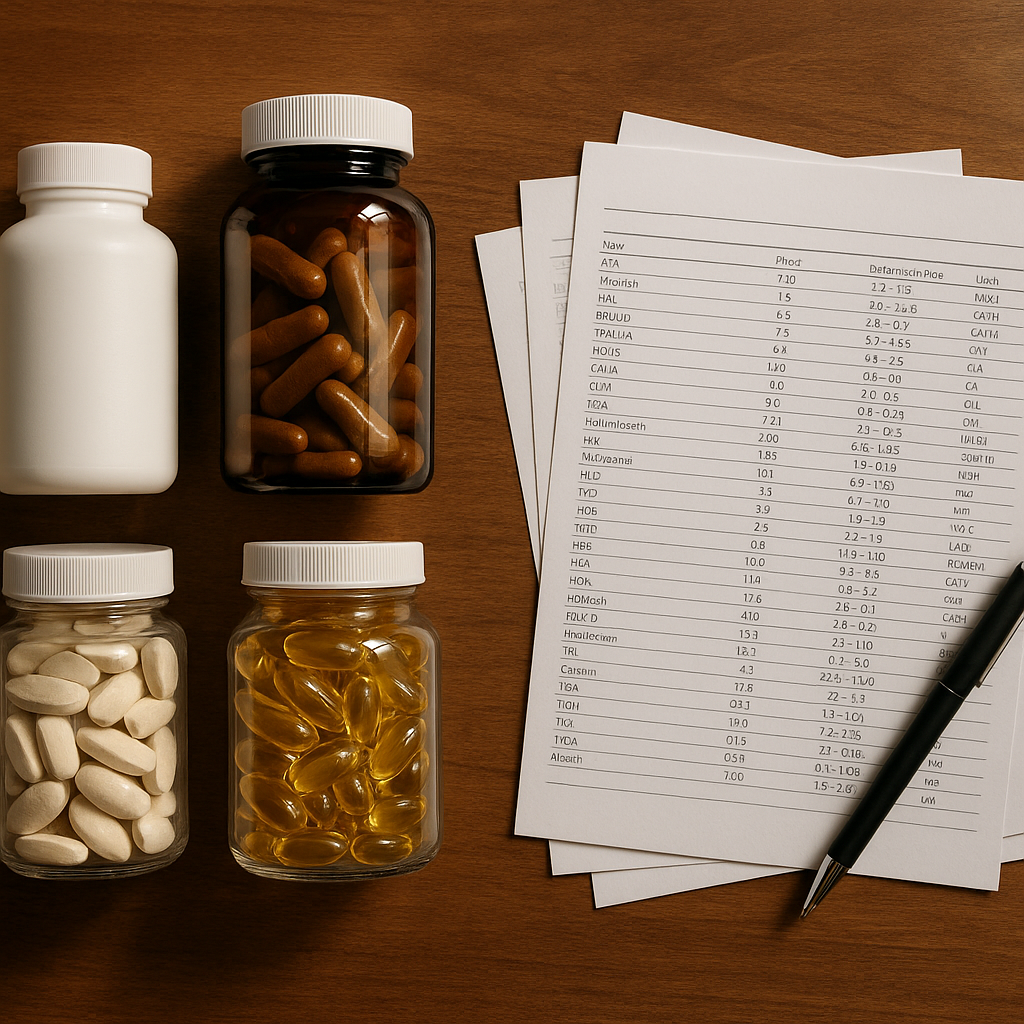
Supplement stacks and bloodwork FAQs
Which blood tests are most important if I use large supplement stacks?
At a minimum, you want liver enzymes (ALT, AST, GGT), kidney markers (creatinine, eGFR), a full blood count, lipid profile, fasting glucose or HbA1c, and key nutrients like vitamin D, B12, folate and iron studies. If you use high dose fat soluble vitamins, stimulants or bodybuilding products, more detailed testing may be sensible. A qualified medical professional can advise based on your history and current stack.
Can supplements damage my liver or kidneys even if they are sold legally?
Yes. Legal does not equal harmless. There are published case reports of liver injury and kidney stress linked to high dose vitamins, herbal blends and bodybuilding products. Many issues develop slowly, with no obvious symptoms at first. That is why regular bloodwork is recommended in clinical guidance when people use long term or high dose substances that affect metabolism, even if they are available over the counter.
How quickly will bloodwork improve after I fix a bad supplement stack?
It depends what was wrong. Mildly raised liver enzymes can sometimes fall back towards normal within weeks after stopping the offending product and improving diet, but deeper nutrient deficiencies or metabolic issues can take months. The key is to change one thing at a time, retest on a sensible schedule, and work with a healthcare professional if your results are far outside normal ranges or do not improve.