
Tag: rapeseed oil health

  • Seed Oils, Saturated Fat and the Online Culture War: What UK Nutrition Science Actually Says

    Seed Oils, Saturated Fat and the Online Culture War: What UK Nutrition Science Actually Says

    If you spend any time on health-focused corners of the internet, you will have encountered the argument: seed oils are poison, they cause inflammation, they are behind every modern chronic disease, and you should throw out your rapeseed oil and replace it with beef tallow immediately. On the other side, you will find people calling that view dangerous nonsense peddled by grifters. Both camps shout loudly. Neither is particularly useful if you are just trying to eat well.

    I want to be straightforward with you here. The seed oils debate is a real scientific question buried under an enormous pile of online culture war. The evidence is not settled in either extreme direction, and UK dietary guidance has not dramatically shifted despite what you may have read. So let us look at what systematic reviews and NHS guidance actually say, and what that means for the oils sitting in your kitchen cupboard.

    Various cooking oils on a kitchen counter, relevant to seed oils health evidence UK
    Photo by Golboo Maghooli on Pexels

    What do we actually mean by seed oils?

    The phrase “seed oils” tends to get used loosely online to mean refined, polyunsaturated vegetable oils, most commonly sunflower, rapeseed, corn, soybean, and similar products. Olive oil, despite technically being pressed from a fruit and sharing some processing characteristics with the others, is usually spared the criticism, presumably because Mediterranean diet research flatters it.

    These oils are high in polyunsaturated fatty acids (PUFAs), particularly omega-6 linoleic acid. The concern raised by critics is that linoleic acid metabolises into arachidonic acid, which can produce pro-inflammatory signalling molecules. That part is biochemically accurate. The leap from there to “seed oils are destroying your health” is where the evidence gets considerably thinner.

    What systematic reviews actually find

    The most robust body of evidence on dietary fat and cardiovascular disease comes from systematic reviews and meta-analyses of randomised controlled trials, not from mechanistic arguments about what a fatty acid does in a test tube.

    A 2020 Cochrane review on reducing saturated fat intake found that replacing saturated fat with polyunsaturated fat, including omega-6-rich seed oils, reduced cardiovascular events by around 17%. The effect on all-cause mortality was less clear, but the cardiovascular signal was consistent across trials. That review looked at over 79,000 participants across 15 trials. It is not a trivial dataset.

    The American Heart Association’s advisory on dietary fats, which draws on much of the same trial literature, reached similar conclusions, though I am more interested in what UK bodies say for obvious reasons. NHS guidance on dietary fats recommends limiting saturated fat and suggests replacing it with unsaturated fats, including oils like rapeseed and sunflower, precisely because the cardiovascular trial evidence supports that swap.

    The SACN (Scientific Advisory Committee on Nutrition), which advises UK government dietary policy, reviewed fat intake in 2019. Its conclusions were consistent with decades of prior guidance: reduce saturated fat, particularly from processed meat and full-fat dairy, and replace with unsaturated alternatives. Seed oils, in that framework, are not the enemy. They are the recommended substitute.

    The oxidation argument and why it needs context

    One of the more credible criticisms of refined seed oils is their instability when heated. Polyunsaturated fats oxidise more readily than saturated or monounsaturated fats at high temperatures, producing compounds including aldehydes that are potentially harmful. A 2015 study from De Montfort University in Leicester, led by Professor Martin Grootveld, found that sunflower oil and corn oil heated to frying temperatures produced significantly more aldehydes than alternatives like olive oil or butter.

    That finding gets amplified in seed oil sceptic circles to mean you should never cook with seed oils. The more measured interpretation is that high-heat cooking with refined polyunsaturated oils is probably not ideal, and alternatives like rapeseed oil (which is lower in polyunsaturates than sunflower), olive oil, or even small amounts of butter are reasonable choices for frying. This is a different claim from “sunflower oil in a salad dressing is damaging your cardiovascular system.”

    Context matters. The UK population is not primarily consuming seed oils through shallow-frying at home. A significant share of dietary intake comes from ultra-processed foods, restaurant meals, and fast food, where the picture is already complicated by salt, refined carbohydrates, and total calorie load. Blaming seed oils in isolation from that broader dietary pattern is intellectually incomplete.

    Where olive oil sits in all of this

    Olive oil is almost universally praised on both sides of the debate, which is itself a bit revealing. It is high in oleic acid, a monounsaturated fat, and extra virgin olive oil contains polyphenols with genuine anti-inflammatory properties backed by multiple trials. The Mediterranean diet, which uses olive oil as its primary cooking fat, has the strongest trial evidence of any dietary pattern for cardiovascular outcomes, including the PREDIMED trial of over 7,000 participants.

    The honest answer is that olive oil is probably the best daily cooking oil for most UK adults if they can afford it and are not cooking at extremely high temperatures repeatedly. Rapeseed oil is a reasonable and cheaper alternative; it has a better fatty acid profile than sunflower oil and is grown domestically. Sunflower oil is fine in moderation for low-heat cooking. None of these is a health catastrophe at normal dietary doses.

    The seed oils health evidence UK debate is genuinely interesting if you approach it without the tribal framing. There are legitimate open questions: the optimal ratio of omega-6 to omega-3 in the diet, the effects of industrial processing on oil quality, the long-term effects of diets very high in linoleic acid. These deserve serious research attention. What they do not justify is the sweeping claim that swapping your rapeseed oil for lard or tallow is a clear cardiovascular upgrade, because the trial evidence does not support that.

    What the noise drowns out

    Debates like this one have a habit of distracting people from changes that would make a measurable difference. The UK population broadly eats too little fibre, too few vegetables, too much processed food, and not enough oily fish. Those patterns carry a well-evidenced cardiovascular and metabolic cost that dwarfs any realistic effect of using sunflower oil instead of olive oil.

    I have written previously on this blog about how inflammation claims around seed oils tend to outpace the evidence, and separately about the risks of using online sources to self-diagnose dietary problems without clinical input. Both feel relevant here. The seed oil conversation lives almost entirely in online spaces where nuance does not travel well.

    If you have a genuine concern about your cardiovascular risk, the productive conversation is with a GP or a registered dietitian, not a social media thread. If your diet broadly follows NHS guidance, includes plenty of whole foods, and uses a variety of fats rather than any single oil in huge quantities, the evidence suggests you are not doing yourself serious harm through your oil choice. That is a dull conclusion, but it is the honest one.

    Frequently Asked Questions

    Are seed oils actually bad for you according to UK health guidance?

    NHS and SACN guidance does not classify seed oils like rapeseed or sunflower oil as harmful. Current UK dietary advice recommends replacing saturated fat with unsaturated fats, which includes these oils. The evidence from systematic reviews supports that swap for cardiovascular health.

    Is cooking with sunflower oil dangerous?

    Sunflower oil produces more oxidation byproducts than olive oil or butter at high frying temperatures, as shown in UK research from De Montfort University. For repeated high-heat cooking, olive oil or rapeseed oil are better choices. Used occasionally at moderate temperatures, sunflower oil is not considered a meaningful health risk.

    Is olive oil healthier than rapeseed oil for UK cooking?

    Extra virgin olive oil has the strongest evidence base, particularly for cardiovascular outcomes, partly due to its polyphenol content. Rapeseed oil is a close and cheaper alternative with a good fatty acid profile and is produced in the UK. Both are sensible choices for everyday cooking.

    Do seed oils cause inflammation?

    Linoleic acid in seed oils can convert to pro-inflammatory compounds via arachidonic acid, but clinical trials have not consistently shown that normal dietary intakes of seed oils raise inflammatory markers in humans. The mechanistic concern is real but has not translated clearly into observable harm in trial populations.
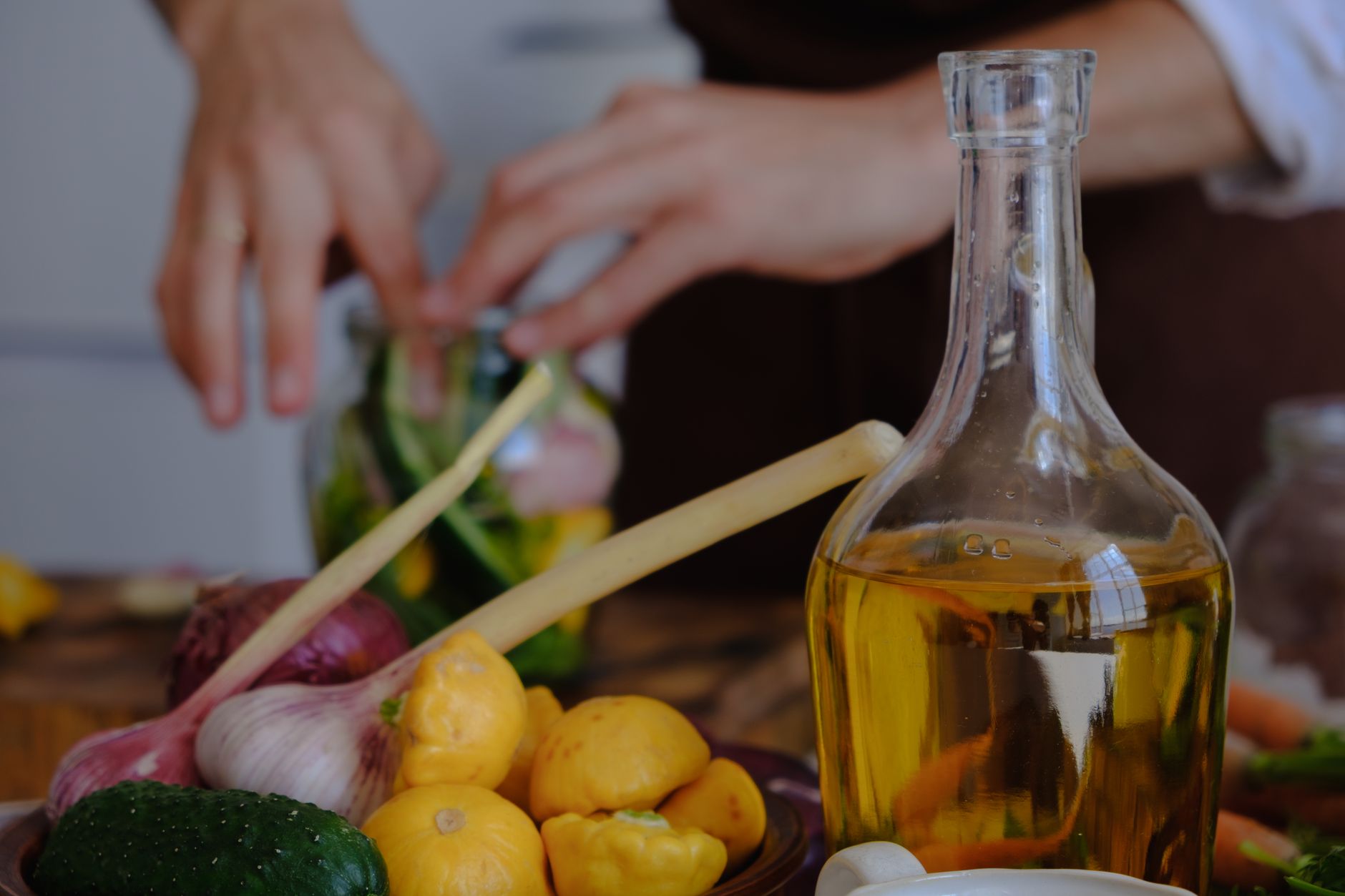
  • Seed Oils, Inflammation and the British Diet: Separating the Science from the Culture War

    Seed Oils, Inflammation and the British Diet: Separating the Science from the Culture War

    If you spend any time in British health and wellness spaces online, you have probably encountered the seed oil debate. On one side, influencers warn that vegetable oils are quietly destroying your gut lining, triggering systemic inflammation and driving chronic disease. On the other side, the instinct is to dismiss all of that as paranoid nonsense from people who eat too much red meat and distrust mainstream medicine. I think both camps are getting it wrong, and the actual evidence is more interesting than either side admits.

    Various cooking oils on a kitchen counter, relevant to the seed oils inflammation UK debate
    Photo by Андрей on Pexels

    What are seed oils, and how much do UK adults actually consume?

    The term “seed oils” covers refined oils extracted from seeds rather than fruit or animal tissue: sunflower, rapeseed, corn, soybean, safflower and cottonseed oils are the ones usually named. In practice, rapeseed oil is by far the most common in the UK, used heavily in food manufacturing and sold widely as “vegetable oil”. Sunflower oil is the second most visible on supermarket shelves.

    According to the National Diet and Nutrition Survey (NDNS), UK adults consume a significant proportion of their fat intake from vegetable oils and spreads. The key point for any honest discussion is that these oils are not a fringe ingredient; they are embedded in the processed food supply. Ready meals, crisps, biscuits, takeaway food and most manufactured sauces contain them. So if you are eating an average British diet, you are consuming seed oils in meaningful quantities whether you think about it or not.

    The linoleic acid argument: is there anything to it?

    The core claim from seed oil sceptics centres on linoleic acid, an omega-6 polyunsaturated fatty acid (PUFA) that makes up a large share of most seed oils. The argument runs like this: linoleic acid is metabolised into arachidonic acid, which is itself a precursor to pro-inflammatory signalling molecules called eicosanoids. Higher linoleic acid intake therefore equals more inflammation. It sounds mechanistically plausible, and that is exactly why it has traction.

    The problem is that the leap from metabolic pathway to clinical outcome is where the evidence does not hold up cleanly. A 2020 systematic review published in Circulation examined randomised controlled trials and found that replacing saturated fat with linoleic-acid-rich oils reduced cardiovascular events. A 2021 meta-analysis in the British Journal of Nutrition found no consistent evidence that higher linoleic acid intake raises circulating arachidonic acid or inflammatory markers in humans to a clinically significant degree. The body appears to regulate this conversion tightly under normal dietary conditions.

    I am not saying those findings close the debate entirely. The quality of available trials is variable, follow-up periods differ, and some researchers make a credible case that the omega-6 to omega-3 ratio matters more than absolute linoleic acid intake. But “plausible mechanism” is not the same as “demonstrated harm”, and that distinction matters enormously. You can find the same pattern in a lot of nutrition debates, including the one around fibre intake in the UK, where mechanistic logic and real-world outcomes sometimes point in different directions.

    What does NICE guidance actually say about dietary fats?

    NICE does not single out seed oils for restriction. The current lipid guidance (CG181, updated most recently in 2023) recommends reducing saturated fat intake and suggests that replacing saturated fats with unsaturated fats, including PUFAs, is associated with better cardiovascular outcomes. That is broadly consistent with the position of the British Heart Foundation and the British Dietetic Association.

    NICE does acknowledge that dietary fat quality matters and that ultra-processed food consumption is a concern, but those two things are not the same as condemning seed oils specifically. If your diet is heavy in ultra-processed food containing seed oils, that is a problem. But the evidence suggests the ultra-processing, the excess energy, the refined carbohydrates and the low fibre are doing most of the heavy lifting in terms of harm, not the oil itself.

    Rapeseed oil specifically: a nuance the debate usually skips

    Most online content about seed oils focuses on American dietary patterns and American products: soybean oil is the dominant culprit in US-centric discussions. In the UK, the picture is different. Rapeseed oil has a much more favourable fatty acid profile than sunflower oil, with a lower omega-6 to omega-3 ratio and a reasonable monounsaturated fat content. Cold-pressed rapeseed oil, in particular, retains some polyphenols with mild antioxidant properties.

    This matters because a lot of the inflammatory claims circulating online are lifted from US sources and applied wholesale to the British context without adjustment. The seed oils in your average British supermarket trolley are not identical in composition to what American commentators are warning about. That does not make rapeseed oil a health food, but it makes the blanket condemnation less well-founded here than the content suggests.

    Where the anti-seed oil crowd has a point

    I do not want to dismiss every concern, because some of them are worth taking seriously. Heat stability is a real issue: seed oils high in PUFAs are more prone to oxidation at high cooking temperatures than olive oil or butter, producing degradation products including aldehydes. The degree to which this is clinically significant under normal home cooking conditions is debated, but the chemistry is real. If you are deep-frying regularly in sunflower oil and reusing it multiple times, switching to a more stable fat is not irrational.

    The omega-6 to omega-3 ratio argument also has some support. The concern is not that linoleic acid is inherently toxic but that a diet very high in omega-6 relative to omega-3 may shift the inflammatory balance in a direction that is not ideal. The practical answer to this is less about cutting seed oils and more about increasing omega-3 intake through oily fish or a supplement. This connects to what I covered in the blog’s earlier piece on whether supplement use is justified for common UK dietary shortfalls; the answer depends heavily on what the rest of your diet looks like.

    What should UK adults actually do?

    The practical answer is less dramatic than either camp wants it to be. Seed oils in moderate amounts, used for everyday cooking, are unlikely to be meaningfully harming you based on the current evidence. The inflammation crisis being attributed to sunflower oil in your stir-fry is probably more accurately attributed to a diet low in vegetables, fibre and oily fish, and high in ultra-processed food overall.

    That said, there is no strong reason to maximise seed oil consumption either. Using olive oil or cold-pressed rapeseed oil for everyday cooking is a reasonable preference, especially for flavour. Keeping omega-3 intake adequate, whether through two portions of oily fish per week (as recommended by the NHS) or a quality supplement, matters more than obsessing over which oil is in the pan.

    The culture war framing around seed oils is ultimately a distraction. The British diet has real problems, including chronically low fibre intake, insufficient protein for many older adults, and widespread omega-3 deficiency. Fixating on a single ingredient, framed as either poison or perfectly safe, usually means missing the bigger picture. Evidence-based dietary thinking is less satisfying than a clear villain, but it is more likely to actually help you. And if you have concerns about inflammation, chronic fatigue or systemic symptoms that do not resolve, that conversation belongs with your GP, not an algorithm. You might also find it useful to read about how the NHS currently handles complex fatigue conditions, where the gap between online certainty and clinical reality is similarly stark.

    Frequently Asked Questions

    Are seed oils causing inflammation in people eating a typical British diet?

    The current systematic review evidence does not support the claim that moderate seed oil consumption causes clinically significant inflammation in otherwise healthy adults. The stronger risk factors in the British diet are low fibre, low omega-3 intake and high ultra-processed food consumption. Seed oils are a component of that processed food problem, but the evidence does not single them out as the primary driver.

    Is rapeseed oil (vegetable oil) as bad as sunflower or soybean oil?

    No, and this distinction matters for UK readers. Cold-pressed rapeseed oil has a better omega-6 to omega-3 ratio than sunflower oil and a reasonable monounsaturated fat content, making it closer to olive oil in profile than to high-linoleic oils. Much of the anti-seed oil content online is based on American dietary patterns dominated by soybean oil, which does not translate directly to the UK context.

    Should I switch from vegetable oil to butter or olive oil for cooking?

    Using olive oil or cold-pressed rapeseed oil for everyday cooking is a reasonable choice, particularly for moderate-heat cooking. Butter is fine in moderate amounts for those without cardiovascular risk factors. What matters more than the specific oil choice is the overall dietary pattern: adequate fibre, vegetables, protein and omega-3 intake will have a far greater effect on health outcomes than swapping one cooking fat for another.