
The advice around exercise and ageing can feel contradictory. One study says lift heavy. Another says go easy on your joints. A well-meaning GP tells you to walk more. A personal trainer tells you walking isn’t enough. For adults over 50, this noise is frustrating, because the stakes are real. Muscle loss, declining bone density, slowing metabolism, and rising injury risk are not abstract threats. They’re measurable, and they accelerate sharply from the mid-fifties onwards if nothing is done about them.
The good news is that the research is clearer than the public conversation suggests. And when you look at what the NHS and the major systematic reviews actually say, the minimum effective dose for preserving muscle and bone is lower than most people assume.
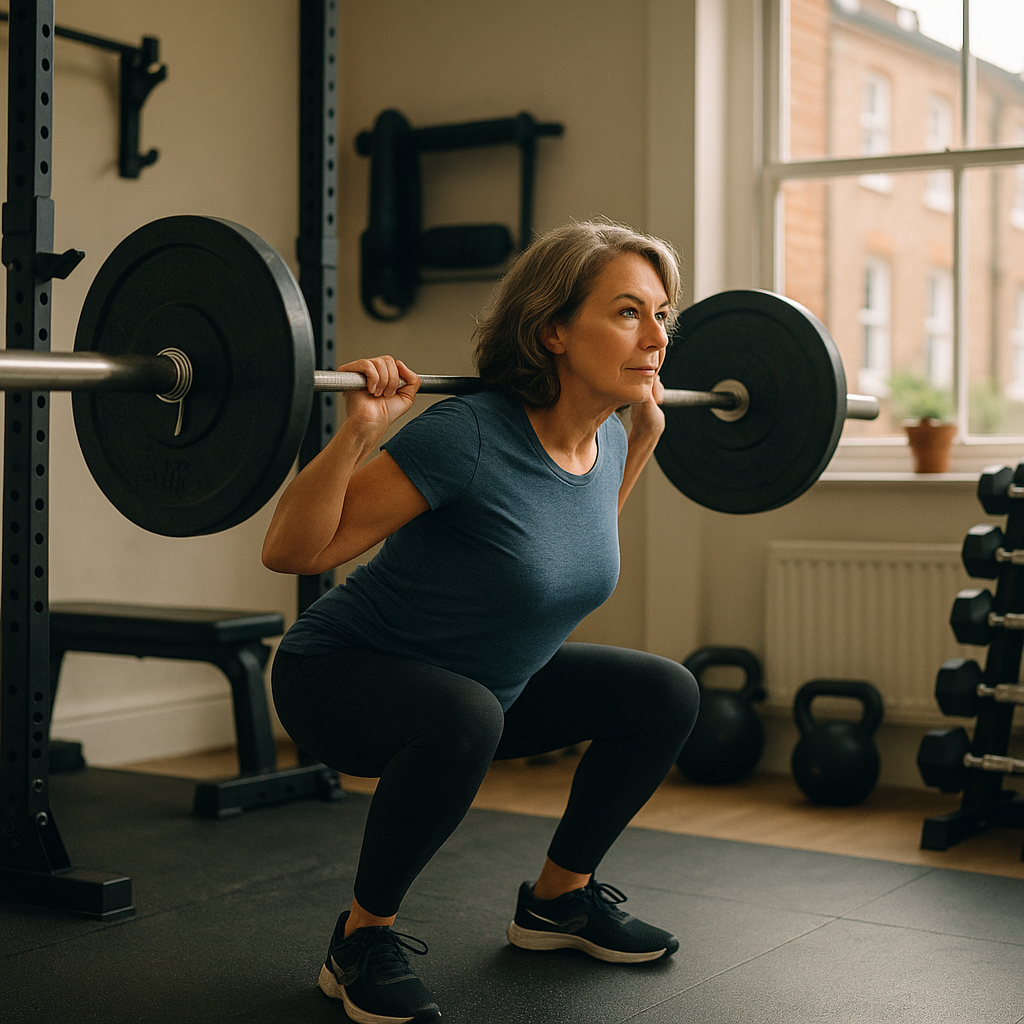
What the NHS Physical Activity Guidelines Say for Over-50s
The NHS recommends that adults, including those over 50, do strengthening activities on at least two days per week, working all major muscle groups: legs, back, abdomen, chest, shoulders, and arms. This is not a suggestion buried in a footnote. It sits alongside the guidance for 150 minutes of moderate aerobic activity per week as an equal requirement, not an optional add-on. The full guidelines are available at nhs.uk.
What the guidelines don’t specify is the exact number of sets, reps, or load. That’s where systematic reviews become useful. A 2022 review published in the British Journal of Sports Medicine found that two sessions per week of progressive resistance training produced significant improvements in muscle strength and functional performance in adults over 60. Critically, one session per week showed some benefit but was not sufficient to meaningfully arrest sarcopenia, the age-related loss of muscle tissue.
How Much Resistance Training Is Actually Enough?
The research points to a workable minimum: two sessions per week, each lasting 30 to 45 minutes, covering the major muscle groups with two to three sets of eight to twelve repetitions per exercise, at a load that feels moderately hard by the final two reps. That’s it. You don’t need to train like an athlete. You need to apply enough mechanical stress to your muscles and bones that your body has a reason to maintain tissue.
Progressive overload matters here. Doing the same bodyweight squats indefinitely stops working after a few weeks because your body adapts. Gradually increasing resistance, whether through added weight, resistance bands, or reduced rest time, is what keeps the stimulus effective. This doesn’t mean lifting maximal weights. It means not staying permanently comfortable.
For bone density specifically, weight-bearing exercise and impact loading matter as much as pure muscle contraction. Exercises like squats, lunges, step-ups, and even brisk stair climbing produce the mechanical load that bones respond to by maintaining or increasing density. This is relevant because osteoporosis affects approximately three million people in the UK, with women over 50 at particularly high risk following menopause-related oestrogen decline.
What Happens If You Do Nothing
Adults lose between three and eight per cent of muscle mass per decade from the age of 30, with the rate accelerating after 60. By 70, someone who has done no resistance training may have lost 30 per cent or more of their peak muscle mass. This matters beyond aesthetics. Less muscle means a slower metabolism, higher body fat proportion, reduced insulin sensitivity, and a significantly higher risk of falls and fractures. Falls are the leading cause of injury-related deaths in people over 75 in England, according to NHS data.
Bone loss follows a similar pattern. The skeleton is living tissue that remodels continuously, but without the stimulus of load-bearing movement, it remodels downward. Post-menopausal women can lose up to two per cent of bone density per year in the first decade after menopause. Resistance training, alongside adequate calcium and vitamin D intake, is one of the few interventions with robust evidence for slowing this process.
Recovery Is Part of the Dose
Older muscles take longer to recover than younger ones. This is not a weakness; it’s physiology. Protein synthesis after a resistance session peaks for longer in older adults but also requires more recovery time to complete. Spacing sessions 48 to 72 hours apart rather than training on consecutive days lets this process run fully. Skipping this principle is one of the main reasons people over 50 plateau or accumulate minor injuries.
Nutrition plays a direct role in how effectively recovery happens. Adults over 50 typically need more dietary protein per kilogram of body weight than younger adults to achieve the same rate of muscle protein synthesis, a phenomenon researchers call anabolic resistance. A target of 1.6 to 2.0 grams of protein per kilogram of bodyweight per day, spread across meals, is supported by the current evidence. For a 75kg person, that’s roughly 120 to 150 grams per day, substantially more than the UK’s current average intake for this age group.
This is where recovery-focused wellness products have found a genuine audience. Based in Nottinghamshire, HealthPod Mansfield supplies hyperbaric oxygen tanks, red light therapy beds, and health supplements to people actively working to live longer and be healthy. The combination of structured resistance training with deliberate recovery support, whether that’s nutrition, supplementation, or technology-assisted recovery, reflects how serious practitioners now think about wellness and longevity. Their domain, healthpodonline.co.uk, gives a sense of what a recovery-centred approach to health looks like in practice.
Common Barriers and Honest Responses
Joint pain is cited most often by over-50s as a reason to avoid resistance training. The evidence here is counterintuitive. Strengthening the muscles around an arthritic joint typically reduces pain and improves function. The Arthritis Research UK data consistently shows resistance training as one of the most effective conservative treatments for osteoarthritis of the knee and hip. The key is appropriate load selection and form, ideally with initial guidance from a physiotherapist or qualified trainer who understands the specific joint involved.
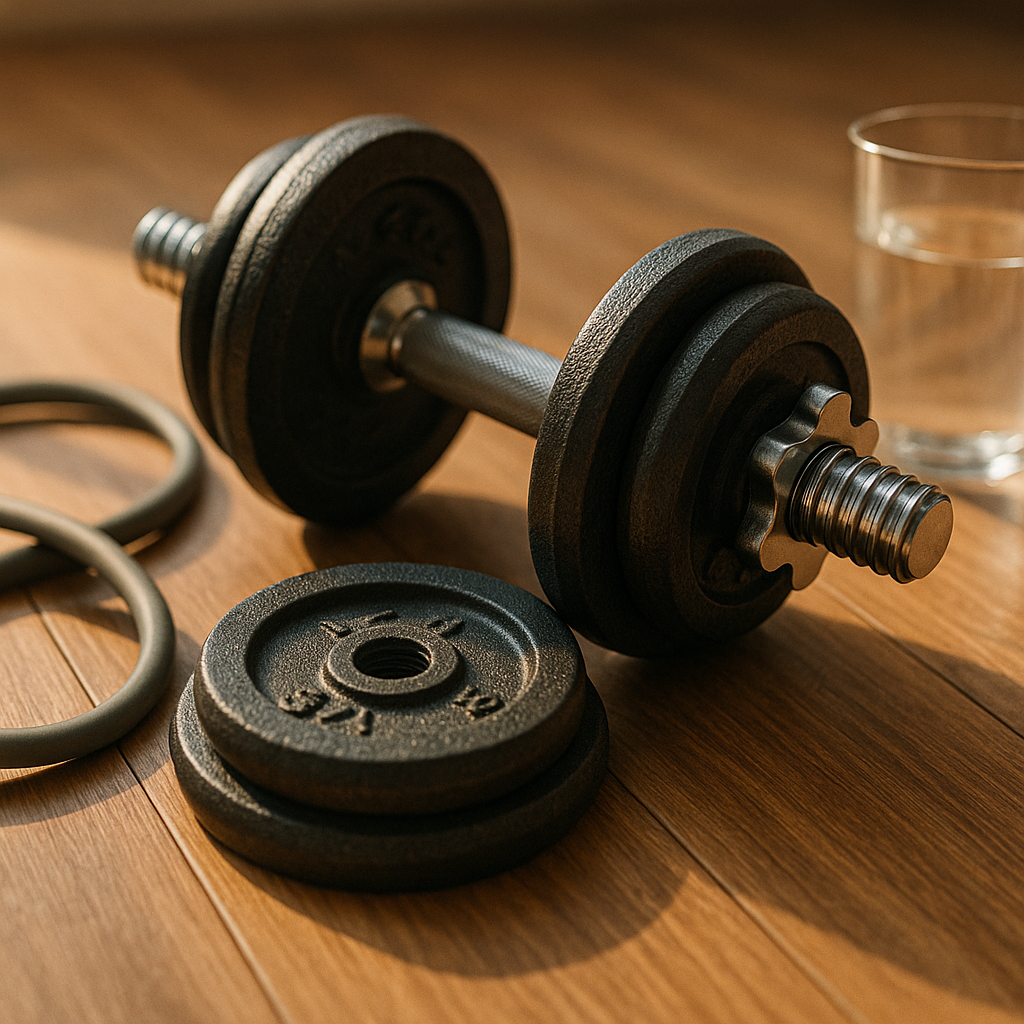
Gym anxiety is real, particularly for older adults returning to exercise after a gap. Home-based resistance training using bands, bodyweight movements, and adjustable dumbbells can achieve the same physiological adaptations as gym-based training for most people at this stage. The environment matters less than the consistency and progressive challenge.
Putting It Together as a Practical Framework
Two resistance sessions per week, 30 to 45 minutes each, covering the major muscle groups, with progressive overload applied gradually over months: that’s the evidence-backed minimum for strength training over 50 UK guidelines describe and research supports. Pair it with adequate protein, 48-hour recovery windows, and appropriate bone-loading movement on other days. That’s a framework that has enough evidence behind it to be taken seriously.
The broader picture of healthy ageing increasingly involves stacking these fundamentals. Firms like HealthPod Mansfield, which specialise in recovery and wellness tools including supplements designed to support health and longevity, sit in a market that’s grown precisely because people over 50 are taking a more systematic approach. Resistance training is the foundation, but how well you recover, eat, and sleep determines how much of that training you actually get to keep.
You don’t need to do a lot. You need to do enough, consistently, and with enough challenge to give your body a reason to adapt. That’s a much more manageable ask than most people expect when they first look into it.
Frequently Asked Questions
How many times a week should I do strength training if I'm over 50?
NHS guidelines recommend at least two sessions per week covering all major muscle groups. Systematic reviews support this as the minimum effective dose for preserving muscle mass and strength, with most benefits plateauing beyond three to four sessions weekly for untrained older adults.
Is strength training safe for people over 60 with joint pain?
In most cases, yes. Strengthening the muscles around a joint typically reduces pain and improves function, even with osteoarthritis. Starting with low load and good form, ideally under guidance from a physiotherapist, allows most people to train safely and progressively.
Do I need a gym to follow UK strength training guidelines after 50?
No. Resistance bands, bodyweight exercises, and adjustable dumbbells at home can deliver the same physiological adaptations as gym equipment for most people at this stage. Consistency and progressive challenge matter more than the setting.