Most of us are online before we have even had breakfast. A notification before the alarm even fades, emails on the commute, Slack pings during lunch. The pace rarely drops. And while technology has delivered genuine, undeniable benefits, the evidence is increasingly clear that our always-on digital environments are extracting a real cost on mental health, one that many people are only beginning to recognise as a problem worth taking seriously.
This is not a call to bin your smartphone or move to a remote Scottish island. It is a look at what the research actually says about digital connectivity mental health, where the risks genuinely lie, and what realistic changes make a meaningful difference.
What the Research Is Actually Showing in 2026
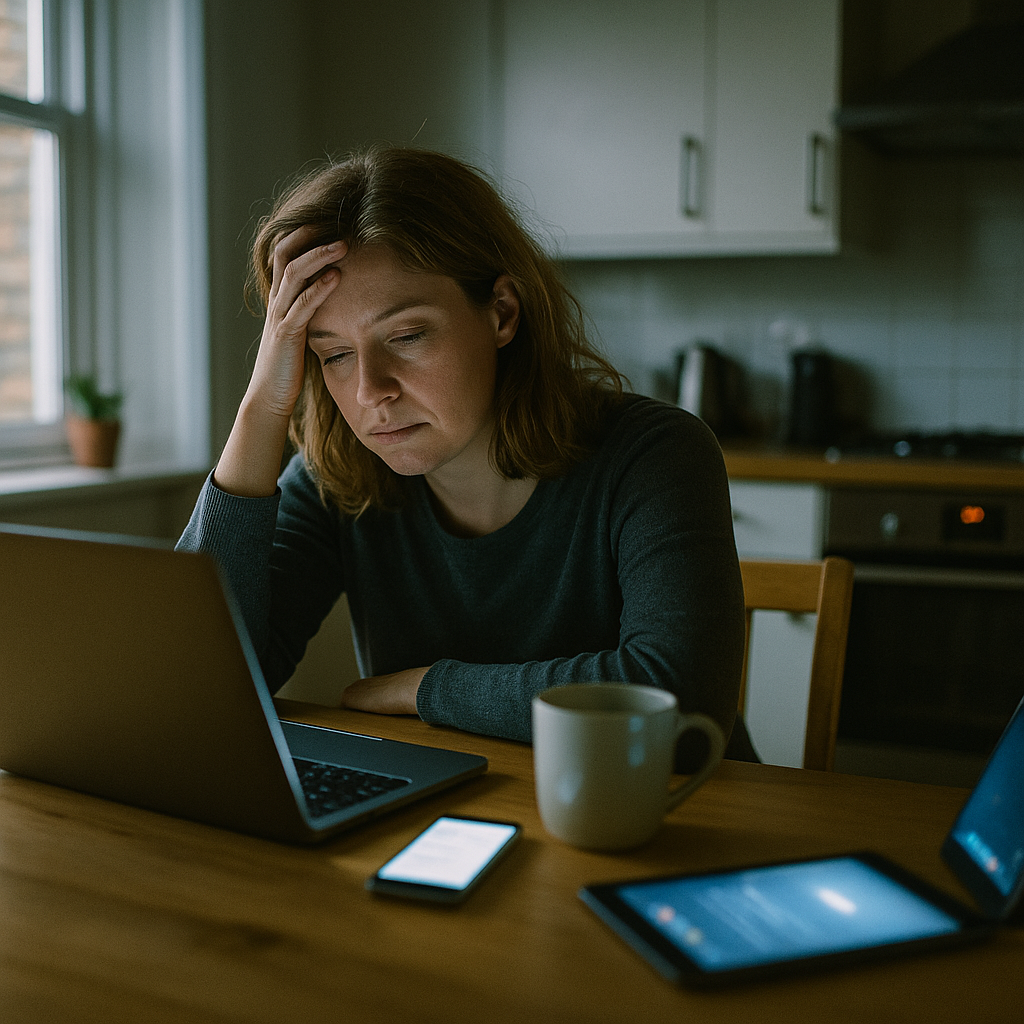
The science has matured considerably over the past few years. Early studies linking screen time to poor wellbeing were often criticised for being too broad or methodologically weak. More recent work is far more specific. A 2025 review published in the journal Psychological Medicine found that chronic exposure to high-notification digital environments is strongly associated with elevated cortisol levels, reduced working memory performance, and increased self-reported symptoms of anxiety and burnout.
The NHS itself has acknowledged the link. Its mental health guidance now explicitly includes digital overload as a contributing factor to anxiety and sleep disruption, particularly among working-age adults. According to the Mental Health Foundation, stress, anxiety, and depression remain the most common mental health concerns across the UK, and work-related digital pressure features prominently in the reported triggers.
What is particularly interesting is the concept of cognitive residue. Research from the University of California (replicated in UK studies) shows that after being interrupted by a digital notification, it can take more than 20 minutes to fully regain your previous level of focus. Multiply that across a working day and the accumulated mental cost becomes significant. Concentration does not just dip; it erodes over time.
Why Anxiety and Burnout Feel Different Now
Burnout is not new. But the texture of it has changed. Previously, burnout was associated with overwork in physically demanding or high-stakes environments. In 2026, it shows up in people who technically have manageable workloads but exist in a state of permanent low-level arousal, always available, always half-monitoring something.
This is sometimes called technoference, the interference of technology in everyday mental functioning. It is not dramatic. It does not announce itself. It gradually narrows your ability to feel genuinely rested, even during time that is technically leisure. You check your phone during a film. You read one more email before bed. The boundary between on and off simply disappears.
Digital connectivity mental health concerns are also showing up in younger adults at higher rates than before. A 2025 ONS survey on adult wellbeing highlighted that people aged 25 to 40 reported lower life satisfaction scores on average than previous cohorts, with work-related digital pressure cited as a key factor. This is the group most likely to be navigating hybrid work, productivity apps, and the expectation of constant availability.
The Specific Mechanisms That Do the Damage
It helps to be precise about what is actually causing harm, because the solutions become more obvious once you identify the mechanisms.
Notification overload and the dopamine loop
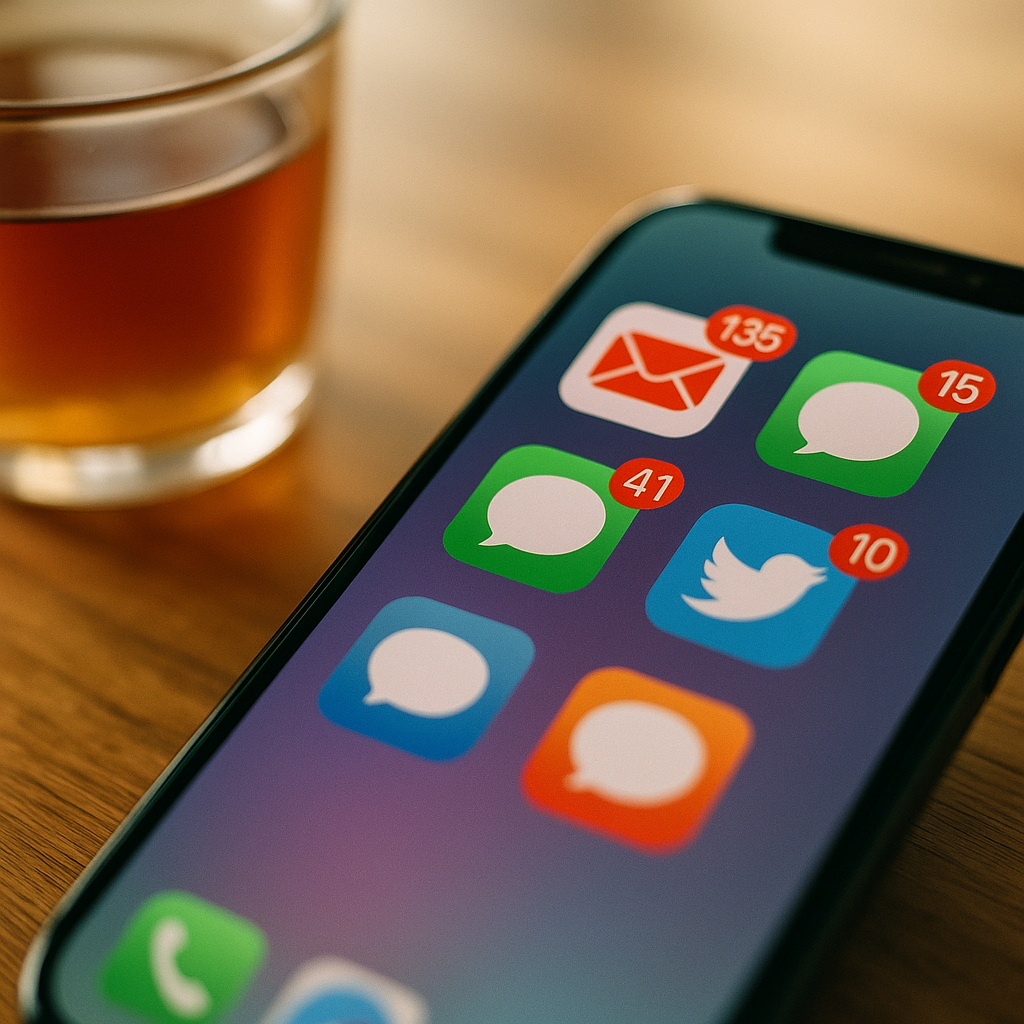
Notifications are designed to interrupt. Each ping triggers a small dopamine response, a brief anticipatory reward. Over time, the brain begins to crave these micro-stimulations, making sustained, deep focus increasingly difficult. This is not a character flaw. It is a predictable neurological response to an environment engineered for engagement.
Sleep disruption from blue light and mental activation
The NHS advises avoiding screens for at least an hour before bed, and with good reason. Blue light suppresses melatonin production, but arguably the bigger issue is mental activation: checking emails or reading distressing news before sleep keeps the brain in a state of alertness that is difficult to wind down from. Poor sleep then compounds anxiety the following day, creating a self-reinforcing cycle.
Social comparison via social media
Passive scrolling on platforms like Instagram and TikTok is consistently associated with lower self-esteem and increased anxiety, particularly when it involves upward social comparison. The key word is passive. Active, intentional engagement with others online does not carry the same risk profile.
Realistic Strategies That Actually Help
Going fully offline is not practical for most people and, frankly, not necessary. The goal is to create deliberate friction between you and the worst habits that digital connectivity mental health research has flagged as harmful.
Set app-specific time limits using your phone’s built-in tools. Both iOS Screen Time and Android’s Digital Wellbeing features allow you to cap usage on specific apps. Setting a 30-minute daily limit on social media is not restrictive. It is simply intentional.
Batch your notifications. Rather than reacting to every ping in real time, schedule two or three windows per day for checking messages and emails. Research from the University of British Columbia (cited in NHS mental health guidance) found that limiting email checks to three times daily reduced stress without reducing productivity.
Protect your mornings and evenings. The first and last 30 minutes of your day are high-leverage times. Reaching for your phone first thing primes your brain for reactivity rather than intention. Keeping it out of the bedroom is one of the single most effective, low-effort changes available to most people.
Use physical cues for transitions. When shifting from work mode to personal time, create a ritual that signals the change. A short walk, making a cup of tea, changing clothes. These small acts help the nervous system disengage from the hyper-vigilant state that constant connectivity encourages.
Audit your tools, not just your time. Are all the apps on your phone genuinely useful, or are some simply habitual? Uninstalling apps you use reflexively rather than purposefully removes the temptation without requiring ongoing willpower.
When to Seek Proper Support
If anxiety, persistent fatigue, or low mood are significantly affecting your daily life, behavioural tweaks alone are not enough. The NHS offers free access to talking therapies through the IAPT (Improving Access to Psychological Therapies) service, which you can self-refer to at nhs.uk. Cognitive behavioural therapy (CBT) has solid evidence behind it for both anxiety and burnout, and waiting times have improved in many areas.
The relationship between digital connectivity mental health and clinical-level distress is not straightforward. For some people, screen habits are a contributing factor. For others, they are a coping mechanism masking deeper issues. A qualified practitioner can help untangle that distinction in a way that a self-help article cannot.
The Bottom Line
Constant connectivity is not inherently harmful. The internet, for all its problems, has expanded access to healthcare information, community, and opportunity in genuinely meaningful ways. But the evidence is now robust enough to say clearly: an always-on default is costing many people their concentration, their calm, and over time, their mental health.
You do not have to choose between being connected and being well. You do have to make a few deliberate choices about how and when you are connected. That distinction, simple as it sounds, is where most of the gains are hiding.
Frequently Asked Questions
Can too much screen time really cause anxiety?
Yes, according to multiple peer-reviewed studies. Chronic exposure to high-notification digital environments raises cortisol levels and is associated with increased symptoms of anxiety. The effect is strongest with passive social media use and late-night screen activity that disrupts sleep.
What is digital burnout and how do I know if I have it?
Digital burnout describes a state of persistent mental fatigue and reduced capacity to concentrate, caused by always-on digital exposure rather than physical overwork. Common signs include feeling exhausted despite rest, inability to focus without checking your phone, and a persistent sense of low-level stress even during leisure time.
How long should I be away from screens each day to protect my mental health?
There is no universal figure, but research supports protecting at least the first and last 30 minutes of your day from screen use. The NHS also recommends a screen-free period before bed to support healthy sleep, which has a strong knock-on effect on mental wellbeing.
Does limiting notifications actually reduce stress?
Research suggests it does. Batching notifications rather than responding in real time reduces the cognitive interruption cycle that drives mental fatigue. Studies have found that checking email just three times a day rather than continuously can measurably reduce self-reported stress.
Where can I get NHS help for anxiety linked to work and digital pressure?
You can self-refer to NHS talking therapies (formerly IAPT) without needing a GP referral first. Cognitive behavioural therapy is commonly offered and has strong evidence for treating both anxiety and burnout. Visit nhs.uk/mental-health to find your local service.