
The UK is not built for hot weather. That is not an opinion; it is a structural reality. The average British home has cavity wall insulation designed to trap warmth, single or double glazing with poor solar gain management, and almost no mechanical cooling. When a heatwave arrives, and according to the Met Office they are becoming more frequent and more intense, British bedrooms turn into something close to a sealed oven. Figuring out how to sleep in heat UK style is therefore not a luxury problem. It is a genuine public health issue.
Before jumping to tips, it helps to understand what is actually happening in your body when you try to sleep in a warm room. That context changes everything.
Why your body temperature matters more than room temperature
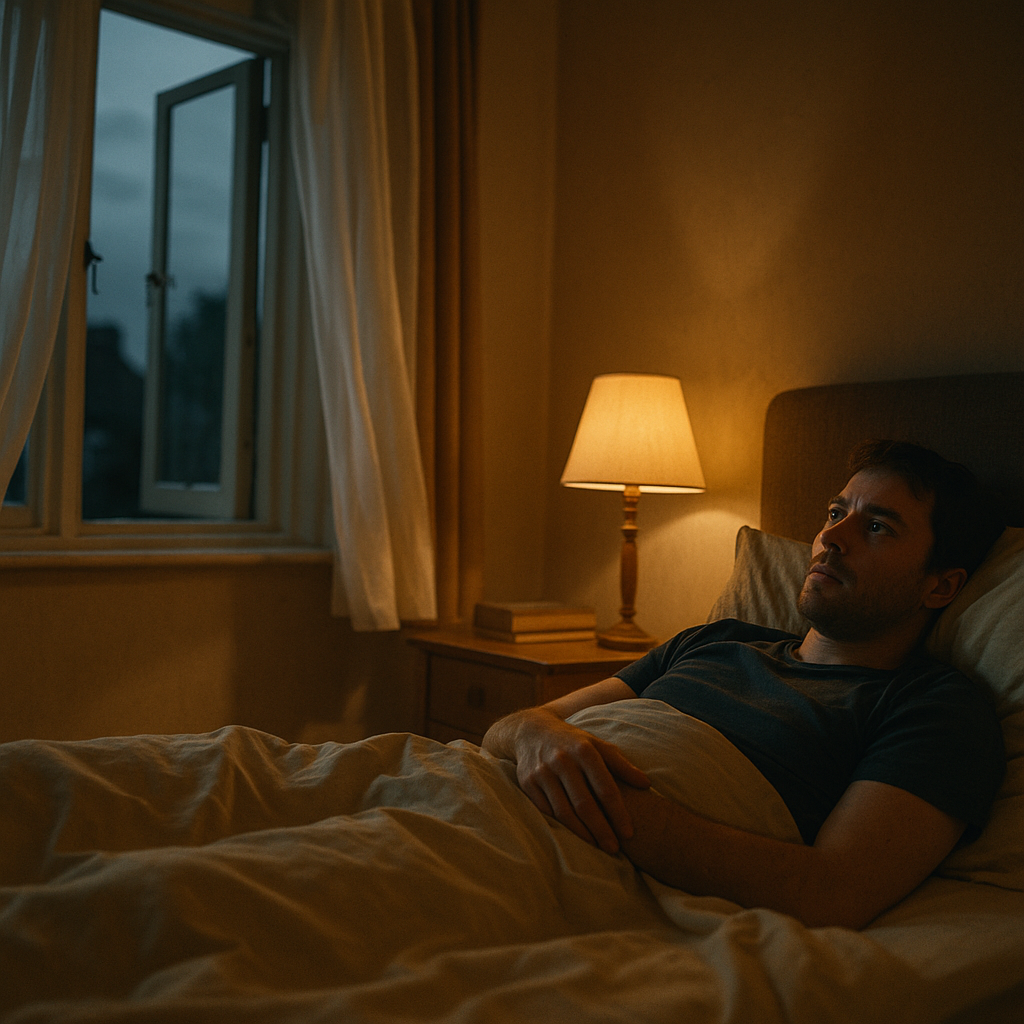
Sleep is not triggered by darkness alone. It is triggered by a drop in your core body temperature. As evening approaches, your body begins shunting heat towards the skin and extremities, a process called distal vasodilation. This radiates heat outward, lowers core temperature by roughly 1°C, and signals to the brain that it is time to sleep. The brain then ramps up melatonin production. This is the chain reaction that puts you under.
A bedroom that is too warm disrupts the first link in that chain. If the ambient temperature is too high, your body cannot offload heat efficiently. Core temperature stays elevated. Melatonin is delayed or suppressed. You lie awake feeling wired and frustrated, which only makes the physiological problem worse by raising cortisol.
Research published in the journal Sleep Medicine Reviews identifies the optimal bedroom temperature for sleep onset as somewhere between 16°C and 19°C. In a British summer heatwave, bedroom temperatures regularly exceed 25°C by midnight. That gap is not trivial. It represents a meaningful disruption to sleep architecture, reducing time spent in slow-wave and REM sleep even in people who manage to fall asleep.
How to sleep in heat UK homes: what actually works
Most advice you will read online boils down to closing curtains and buying a fan. Both are useful. Neither is sufficient on its own, and neither addresses the underlying physiology.
Accelerate your body’s own cooling mechanism
Because sleep onset depends on peripheral heat loss, anything that draws blood to the surface of the skin helps. A warm shower or bath 60 to 90 minutes before bed is one of the most evidence-supported interventions available. This sounds counterintuitive. You are adding heat to a body that needs to cool. But the warmth causes immediate vasodilation in hands, feet, and face. When you step out into cooler air, heat radiates outward rapidly, producing a net cooling effect that measurably reduces sleep onset time. A cold shower has the opposite effect: it causes vasoconstriction, which traps heat centrally.
Wearing light cotton socks to bed serves a similar purpose. Warm feet help blood vessels dilate at the extremities, promoting the outward movement of core heat. Several studies, including work from the Chronobiology Lab at the University of Basel, have found that warming the hands and feet accelerates sleep onset significantly in older adults, though the mechanism applies more broadly.
Think about airflow, not just air temperature
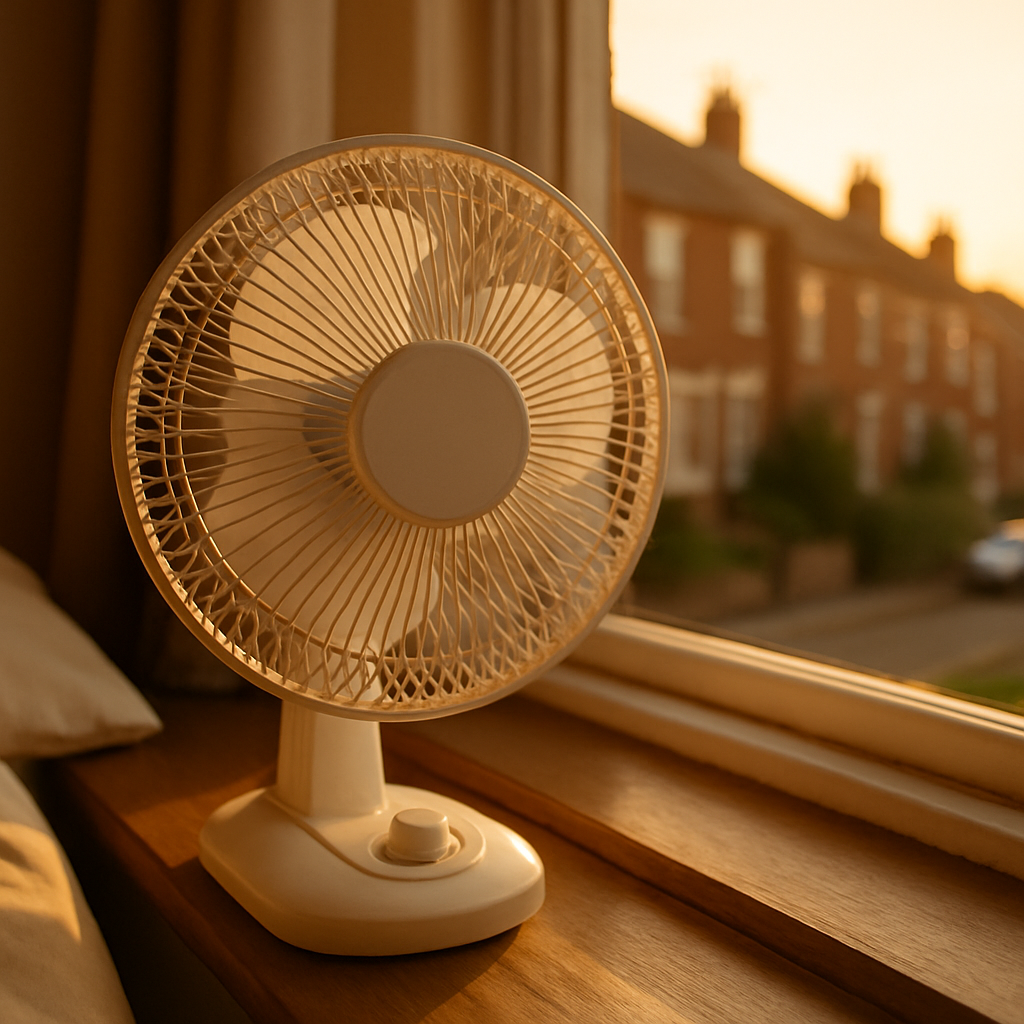
A fan does not cool the air in a room. It moves it. The cooling effect comes from evaporating sweat on your skin, which removes heat directly. This distinction matters because a fan pointed at your face in a 27°C room is genuinely useful for thermoregulation, while a fan circulating hot air around a sealed room offers less benefit than people assume.
Cross-ventilation is more effective. Open a window on the cooler side of the house and a window or door on the warmer side, creating a pressure differential that draws air through the space. In UK terraced or semi-detached houses, this often means opening bedroom and bathroom windows on opposite sides of the building. The temperature drop can be several degrees compared with a sealed room.
The classic advice to keep curtains shut during the day does have merit. South-facing windows in particular allow significant solar heat gain through glass. Blackout curtains or thermal blinds reduce this substantially. But closing curtains in the evening on a cooler night can trap heat that has already built up internally. Once outdoor air drops below indoor temperature, typically after 9 or 10 pm during UK heatwaves, opening windows aggressively to flush hot air out is more valuable than maintaining a sealed environment.
Bedding and mattress choices matter more than most people realise
Memory foam and synthetic mattress toppers are notoriously poor at heat dissipation. They conform to the body and restrict airflow at the contact surface, creating localised hot spots that persist through the night. Latex and open-coil mattresses allow better air movement. If a new mattress is not in the budget, sleeping on top of a pure cotton mattress protector rather than on synthetic fabric makes a meaningful difference.
Cotton and linen bedding outperforms polyester blends significantly. Linen in particular wicks moisture away from the skin faster than almost any natural fabric and feels cool to the touch even at room temperature. A single cotton sheet rather than a duvet is sufficient for most UK summer nights above 20°C. If you need something over you for psychological comfort, a thin muslin blanket is a reasonable compromise.
Hydration and timing
Dehydration raises core body temperature, which makes the sleep-onset problem worse. Drinking enough water through the day is relevant here, not just for general health. Aim for pale yellow urine as a simple guide. Avoid large amounts of fluid immediately before bed to prevent waking for the toilet, but do keep a small glass of water on the bedside table: waking briefly in the heat and taking a sip can help settle thermoregulation without fully disrupting sleep.
Alcohol is a particular issue in summer. It causes initial vasodilation that feels cooling, but as it metabolises it suppresses REM sleep and causes rebound arousal in the second half of the night. Hot and humid nights combined with alcohol lead to the shallow, unrefreshing sleep that many people associate with British summers.
What about portable air conditioning units?
Sales of portable air conditioning units have risen sharply in the UK over the past few summers. They do work, but with significant caveats. Most portable units are single-hose designs: they draw air from inside the room, cool it, and exhaust hot air outside through a window duct. The problem is that extracting air from the room creates negative pressure, drawing warm air back in through gaps around doors and other windows. The net cooling effect is considerably less efficient than manufacturers suggest, and running costs are substantial given current energy prices.
A dual-hose unit addresses this problem but is more expensive and harder to source in the UK market. If budget allows, these are worth considering for anyone with a health condition that makes heat particularly dangerous. The NHS has issued guidance on heat-health risks, particularly for older adults, people with cardiovascular conditions, and those taking certain medications. For those groups, effective cooling is not optional.
The honest picture
There is no single fix for sleeping in a poorly insulated British house during a heatwave. What the science offers is a clearer understanding of why the body struggles and which interventions address the root cause rather than just creating the feeling of doing something. A warm bath before bed, cross-ventilation, cotton bedding, and sensible hydration will not replicate a climate-controlled hotel room. But they will move the needle in a way that keeping the curtains shut alone simply will not.
The UK climate is changing. Understanding how to sleep in heat UK conditions is becoming less of a niche concern and more of a practical skill worth having.
Frequently Asked Questions
What is the best room temperature for sleeping in the UK?
Research suggests a bedroom temperature between 16°C and 19°C is optimal for sleep onset. This is because your body needs to lower its core temperature by around 1°C to trigger the sleep response, which becomes much harder when the room is warmer than this range.
Does a fan actually help you sleep in the heat?
Yes, but it works by evaporating sweat from your skin rather than cooling the air in the room. Pointing a fan directly at you while you sleep is genuinely useful for thermoregulation. Cross-ventilation by using fans to push hot air out and draw cooler air in is even more effective.
Should you have a cold shower or a warm shower before bed in hot weather?
A warm shower 60 to 90 minutes before bed is more effective for sleep. It causes vasodilation at the skin’s surface, and when you step into cooler air afterwards, heat radiates away quickly, producing a net cooling of your core body temperature. A cold shower causes vasoconstriction, which can actually trap heat centrally.
Is it worth buying a portable air conditioning unit for a UK bedroom?
Single-hose portable units are less efficient than they appear because they create negative pressure that draws warm air back into the room. Dual-hose units work better but are harder to find and more expensive. For most people, improving ventilation and using evidence-based sleep strategies will deliver a better cost-to-benefit ratio.
Why do I sleep so badly during UK heatwaves even when I am not that hot?
Even modest elevations in bedroom temperature delay sleep onset, reduce slow-wave sleep, and shorten REM sleep. You may not consciously feel overheated, but your body’s thermoregulation process is still being disrupted. Alcohol consumption, which is common during warm social evenings, compounds this by suppressing REM sleep in the second half of the night.
Leave a Reply