Tag: sleep health uk

  • Thermal Comfort, Sleep and the British Summer: What the Science Says About Sleeping in a Country Without Air Conditioning

    Thermal Comfort, Sleep and the British Summer: What the Science Says About Sleeping in a Country Without Air Conditioning

    The UK is not built for hot weather. That is not an opinion; it is a structural reality. The average British home has cavity wall insulation designed to trap warmth, single or double glazing with poor solar gain management, and almost no mechanical cooling. When a heatwave arrives, and according to the Met Office they are becoming more frequent and more intense, British bedrooms turn into something close to a sealed oven. Figuring out how to sleep in heat UK style is therefore not a luxury problem. It is a genuine public health issue.

    Before jumping to tips, it helps to understand what is actually happening in your body when you try to sleep in a warm room. That context changes everything.
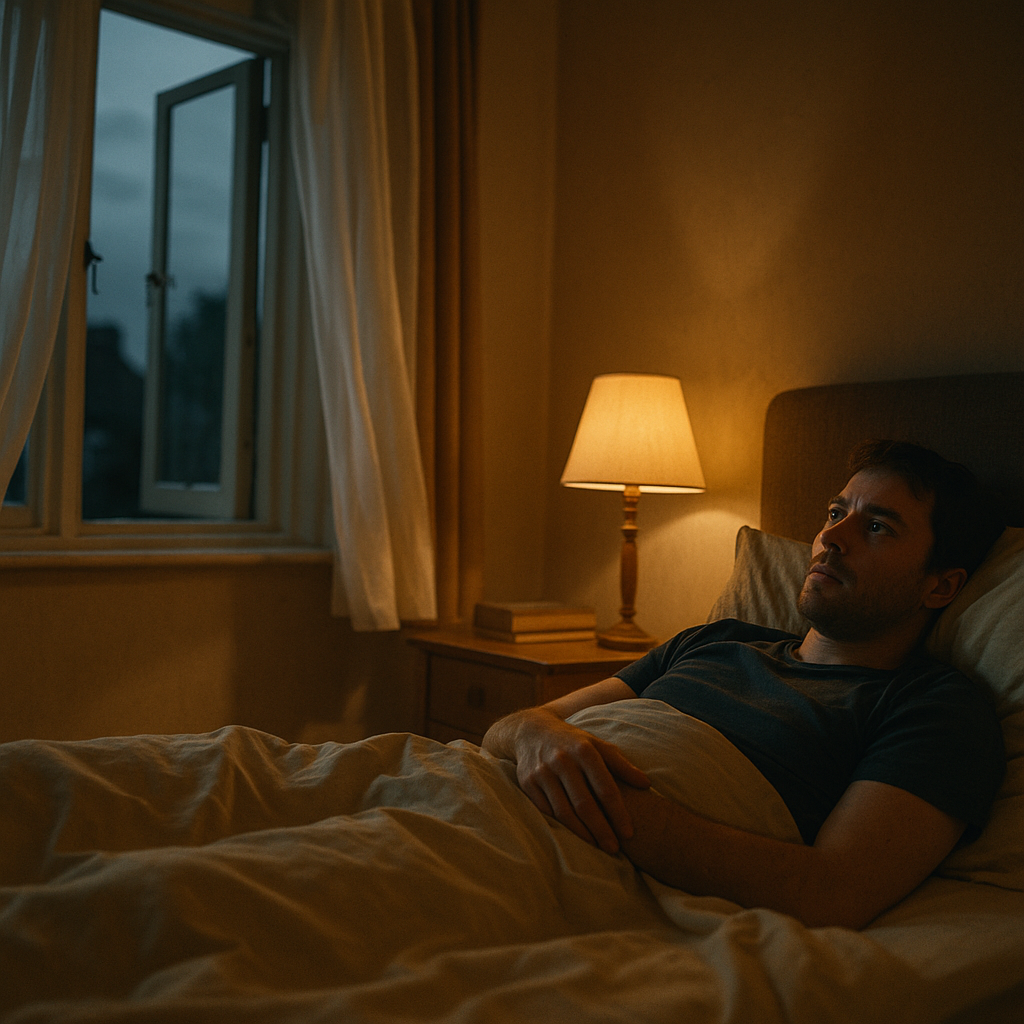
    Person lying awake in a warm British bedroom at night illustrating how to sleep in heat UK
    Person lying awake in a warm British bedroom at night illustrating how to sleep in heat UK

    Why your body temperature matters more than room temperature

    Sleep is not triggered by darkness alone. It is triggered by a drop in your core body temperature. As evening approaches, your body begins shunting heat towards the skin and extremities, a process called distal vasodilation. This radiates heat outward, lowers core temperature by roughly 1°C, and signals to the brain that it is time to sleep. The brain then ramps up melatonin production. This is the chain reaction that puts you under.

    A bedroom that is too warm disrupts the first link in that chain. If the ambient temperature is too high, your body cannot offload heat efficiently. Core temperature stays elevated. Melatonin is delayed or suppressed. You lie awake feeling wired and frustrated, which only makes the physiological problem worse by raising cortisol.

    Research published in the journal Sleep Medicine Reviews identifies the optimal bedroom temperature for sleep onset as somewhere between 16°C and 19°C. In a British summer heatwave, bedroom temperatures regularly exceed 25°C by midnight. That gap is not trivial. It represents a meaningful disruption to sleep architecture, reducing time spent in slow-wave and REM sleep even in people who manage to fall asleep.

    How to sleep in heat UK homes: what actually works

    Most advice you will read online boils down to closing curtains and buying a fan. Both are useful. Neither is sufficient on its own, and neither addresses the underlying physiology.

    Accelerate your body’s own cooling mechanism

    Because sleep onset depends on peripheral heat loss, anything that draws blood to the surface of the skin helps. A warm shower or bath 60 to 90 minutes before bed is one of the most evidence-supported interventions available. This sounds counterintuitive. You are adding heat to a body that needs to cool. But the warmth causes immediate vasodilation in hands, feet, and face. When you step out into cooler air, heat radiates outward rapidly, producing a net cooling effect that measurably reduces sleep onset time. A cold shower has the opposite effect: it causes vasoconstriction, which traps heat centrally.

    Wearing light cotton socks to bed serves a similar purpose. Warm feet help blood vessels dilate at the extremities, promoting the outward movement of core heat. Several studies, including work from the Chronobiology Lab at the University of Basel, have found that warming the hands and feet accelerates sleep onset significantly in older adults, though the mechanism applies more broadly.
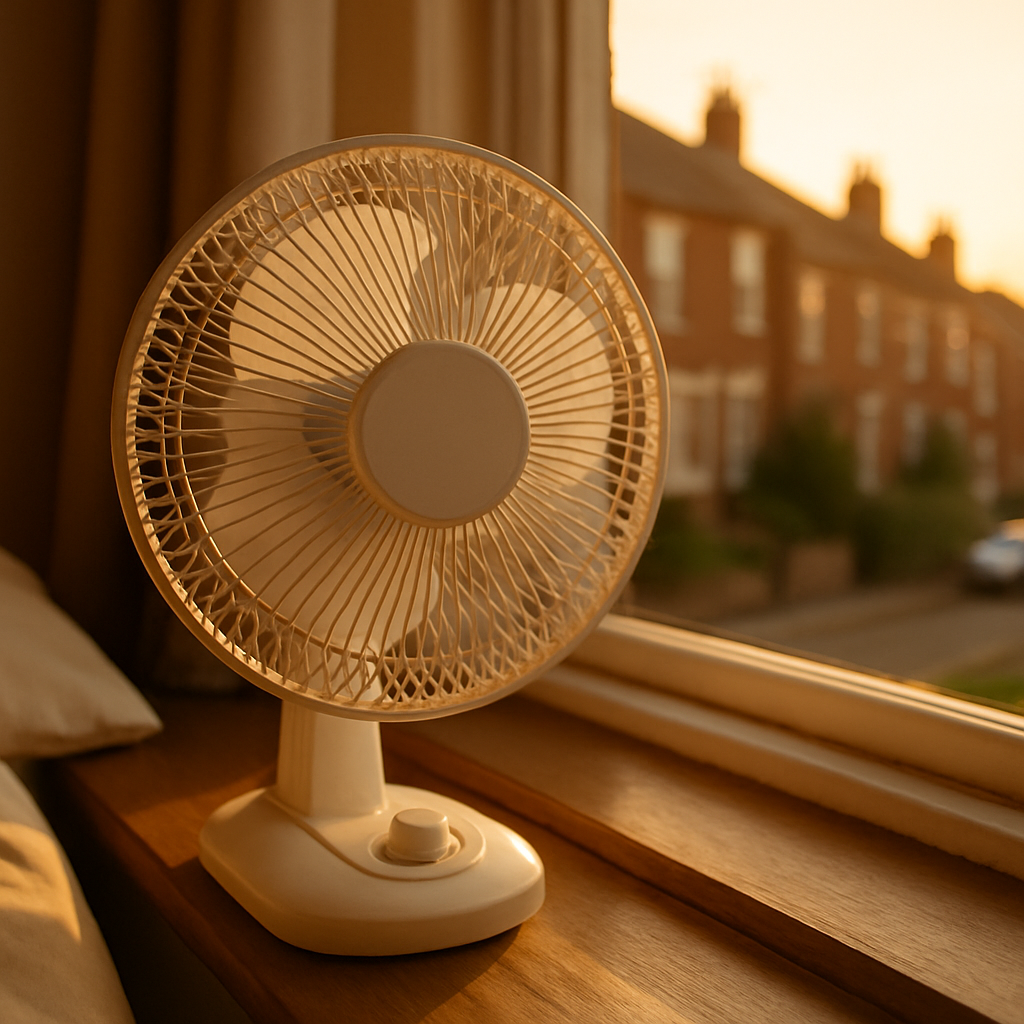
    Portable fan on a British bedroom windowsill as a strategy for how to sleep in heat UK
    Portable fan on a British bedroom windowsill as a strategy for how to sleep in heat UK

    Think about airflow, not just air temperature

    A fan does not cool the air in a room. It moves it. The cooling effect comes from evaporating sweat on your skin, which removes heat directly. This distinction matters because a fan pointed at your face in a 27°C room is genuinely useful for thermoregulation, while a fan circulating hot air around a sealed room offers less benefit than people assume.

    Cross-ventilation is more effective. Open a window on the cooler side of the house and a window or door on the warmer side, creating a pressure differential that draws air through the space. In UK terraced or semi-detached houses, this often means opening bedroom and bathroom windows on opposite sides of the building. The temperature drop can be several degrees compared with a sealed room.

    The classic advice to keep curtains shut during the day does have merit. South-facing windows in particular allow significant solar heat gain through glass. Blackout curtains or thermal blinds reduce this substantially. But closing curtains in the evening on a cooler night can trap heat that has already built up internally. Once outdoor air drops below indoor temperature, typically after 9 or 10 pm during UK heatwaves, opening windows aggressively to flush hot air out is more valuable than maintaining a sealed environment.

    Bedding and mattress choices matter more than most people realise

    Memory foam and synthetic mattress toppers are notoriously poor at heat dissipation. They conform to the body and restrict airflow at the contact surface, creating localised hot spots that persist through the night. Latex and open-coil mattresses allow better air movement. If a new mattress is not in the budget, sleeping on top of a pure cotton mattress protector rather than on synthetic fabric makes a meaningful difference.

    Cotton and linen bedding outperforms polyester blends significantly. Linen in particular wicks moisture away from the skin faster than almost any natural fabric and feels cool to the touch even at room temperature. A single cotton sheet rather than a duvet is sufficient for most UK summer nights above 20°C. If you need something over you for psychological comfort, a thin muslin blanket is a reasonable compromise.

    Hydration and timing

    Dehydration raises core body temperature, which makes the sleep-onset problem worse. Drinking enough water through the day is relevant here, not just for general health. Aim for pale yellow urine as a simple guide. Avoid large amounts of fluid immediately before bed to prevent waking for the toilet, but do keep a small glass of water on the bedside table: waking briefly in the heat and taking a sip can help settle thermoregulation without fully disrupting sleep.

    Alcohol is a particular issue in summer. It causes initial vasodilation that feels cooling, but as it metabolises it suppresses REM sleep and causes rebound arousal in the second half of the night. Hot and humid nights combined with alcohol lead to the shallow, unrefreshing sleep that many people associate with British summers.

    What about portable air conditioning units?

    Sales of portable air conditioning units have risen sharply in the UK over the past few summers. They do work, but with significant caveats. Most portable units are single-hose designs: they draw air from inside the room, cool it, and exhaust hot air outside through a window duct. The problem is that extracting air from the room creates negative pressure, drawing warm air back in through gaps around doors and other windows. The net cooling effect is considerably less efficient than manufacturers suggest, and running costs are substantial given current energy prices.

    A dual-hose unit addresses this problem but is more expensive and harder to source in the UK market. If budget allows, these are worth considering for anyone with a health condition that makes heat particularly dangerous. The NHS has issued guidance on heat-health risks, particularly for older adults, people with cardiovascular conditions, and those taking certain medications. For those groups, effective cooling is not optional.

    The honest picture

    There is no single fix for sleeping in a poorly insulated British house during a heatwave. What the science offers is a clearer understanding of why the body struggles and which interventions address the root cause rather than just creating the feeling of doing something. A warm bath before bed, cross-ventilation, cotton bedding, and sensible hydration will not replicate a climate-controlled hotel room. But they will move the needle in a way that keeping the curtains shut alone simply will not.

    The UK climate is changing. Understanding how to sleep in heat UK conditions is becoming less of a niche concern and more of a practical skill worth having.

    Frequently Asked Questions

    What is the best room temperature for sleeping in the UK?

    Research suggests a bedroom temperature between 16°C and 19°C is optimal for sleep onset. This is because your body needs to lower its core temperature by around 1°C to trigger the sleep response, which becomes much harder when the room is warmer than this range.

    Does a fan actually help you sleep in the heat?

    Yes, but it works by evaporating sweat from your skin rather than cooling the air in the room. Pointing a fan directly at you while you sleep is genuinely useful for thermoregulation. Cross-ventilation by using fans to push hot air out and draw cooler air in is even more effective.

    Should you have a cold shower or a warm shower before bed in hot weather?

    A warm shower 60 to 90 minutes before bed is more effective for sleep. It causes vasodilation at the skin’s surface, and when you step into cooler air afterwards, heat radiates away quickly, producing a net cooling of your core body temperature. A cold shower causes vasoconstriction, which can actually trap heat centrally.

    Is it worth buying a portable air conditioning unit for a UK bedroom?

    Single-hose portable units are less efficient than they appear because they create negative pressure that draws warm air back into the room. Dual-hose units work better but are harder to find and more expensive. For most people, improving ventilation and using evidence-based sleep strategies will deliver a better cost-to-benefit ratio.

    Why do I sleep so badly during UK heatwaves even when I am not that hot?

    Even modest elevations in bedroom temperature delay sleep onset, reduce slow-wave sleep, and shorten REM sleep. You may not consciously feel overheated, but your body’s thermoregulation process is still being disrupted. Alcohol consumption, which is common during warm social evenings, compounds this by suppressing REM sleep in the second half of the night.
  • Why Your Smartphone Is Probably Disrupting Your Sleep More Than You Think

    Why Your Smartphone Is Probably Disrupting Your Sleep More Than You Think

    Most people have heard the blue light warning. Put your phone down before bed, get a blue light filter, maybe buy some orange-tinted glasses. It’s become standard advice, almost background noise. But smartphone sleep disruption runs considerably deeper than the light coming off your screen, and understanding why matters if you actually want to fix it.

    The mechanisms at work are neurological, hormonal, and behavioural. Some of them kick in before you’ve even opened an app.

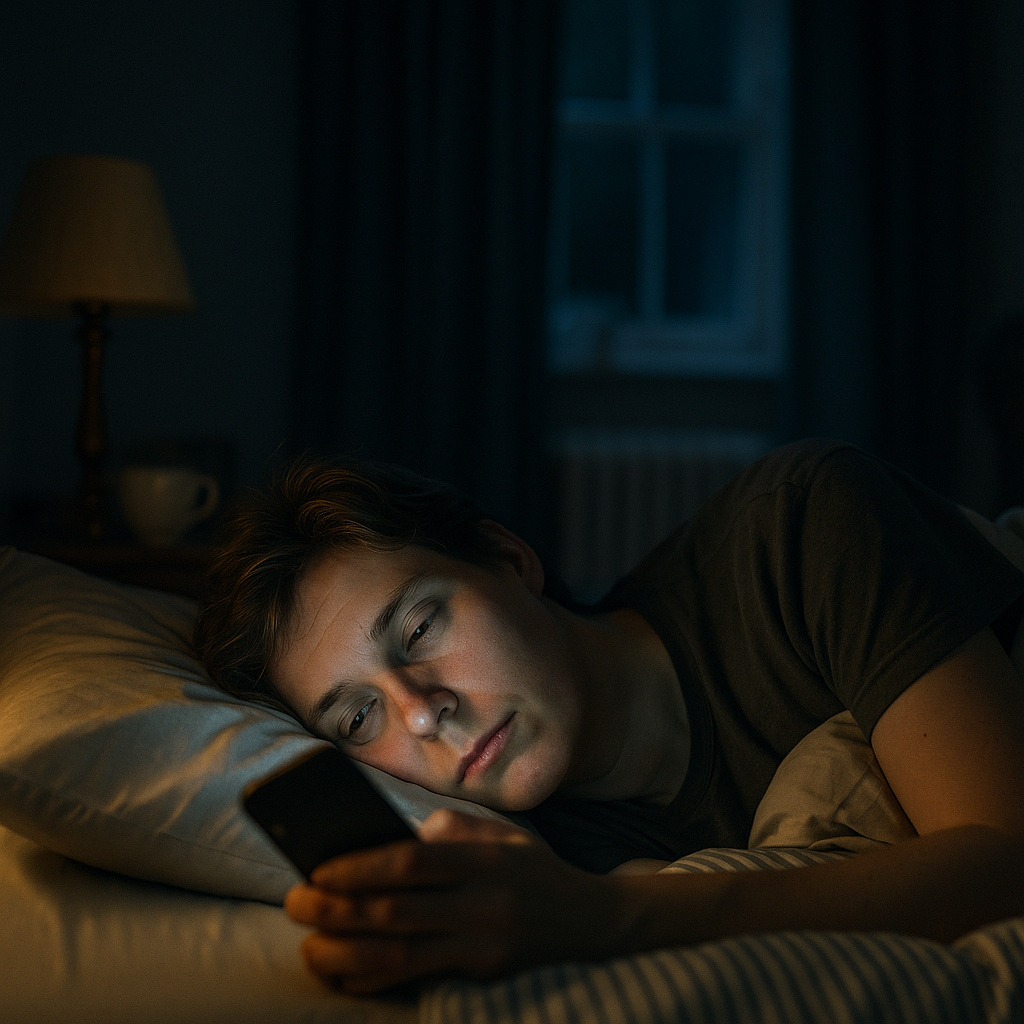
    Person in bed at night showing smartphone sleep disruption from screen use
    Person in bed at night showing smartphone sleep disruption from screen use

    What Blue Light Actually Does (And What It Doesn’t Explain)

    Blue light is real. Short-wavelength light in the 460–480 nm range suppresses melatonin production by activating intrinsically photosensitive retinal ganglion cells (ipRGCs), which feed directly into the suprachiasmatic nucleus in the hypothalamus. This is your body’s master clock. Disrupting it shifts your circadian rhythm later, making it harder to fall asleep and harder to wake up feeling rested.

    According to the NHS Every Mind Matters resource on sleep, poor sleep is linked to increased risk of anxiety, depression, and reduced immune function. The ripple effects are not trivial.

    But here’s the thing: blue light filters and night mode settings reduce the problem modestly at best. Research from the University of Manchester suggests the warm-toned light emitted by night mode may actually still interfere with sleep onset because the brain’s circadian photoreceptors are sensitive to luminance levels, not just colour temperature. The bigger problems are happening elsewhere.

    The Dopamine Loop Nobody Talks About

    Your smartphone is a variable reward machine. Social media feeds, messaging apps, news notifications. each delivers unpredictable micro-doses of novelty. Novelty triggers dopamine release in the nucleus accumbens. Dopamine creates anticipation, not satisfaction, which means you keep scrolling to get the next hit.

    This state of heightened arousal is the opposite of what the brain needs to transition into sleep. Sleep onset requires a drop in core body temperature, a reduction in cortisol, and a gradual shift in brain activity from beta waves (alert, focused) to alpha and then theta waves. Scrolling through your phone at 23:00 actively prevents this transition. Your nervous system is in a mild but persistent state of activation.

    The problem compounds because this loop is habitual. Many people reach for their phone within minutes of waking and within minutes of getting into bed. The bedroom itself becomes conditioned as a place of stimulation rather than rest, which is a well-documented issue in sleep medicine known as stimulus control failure.

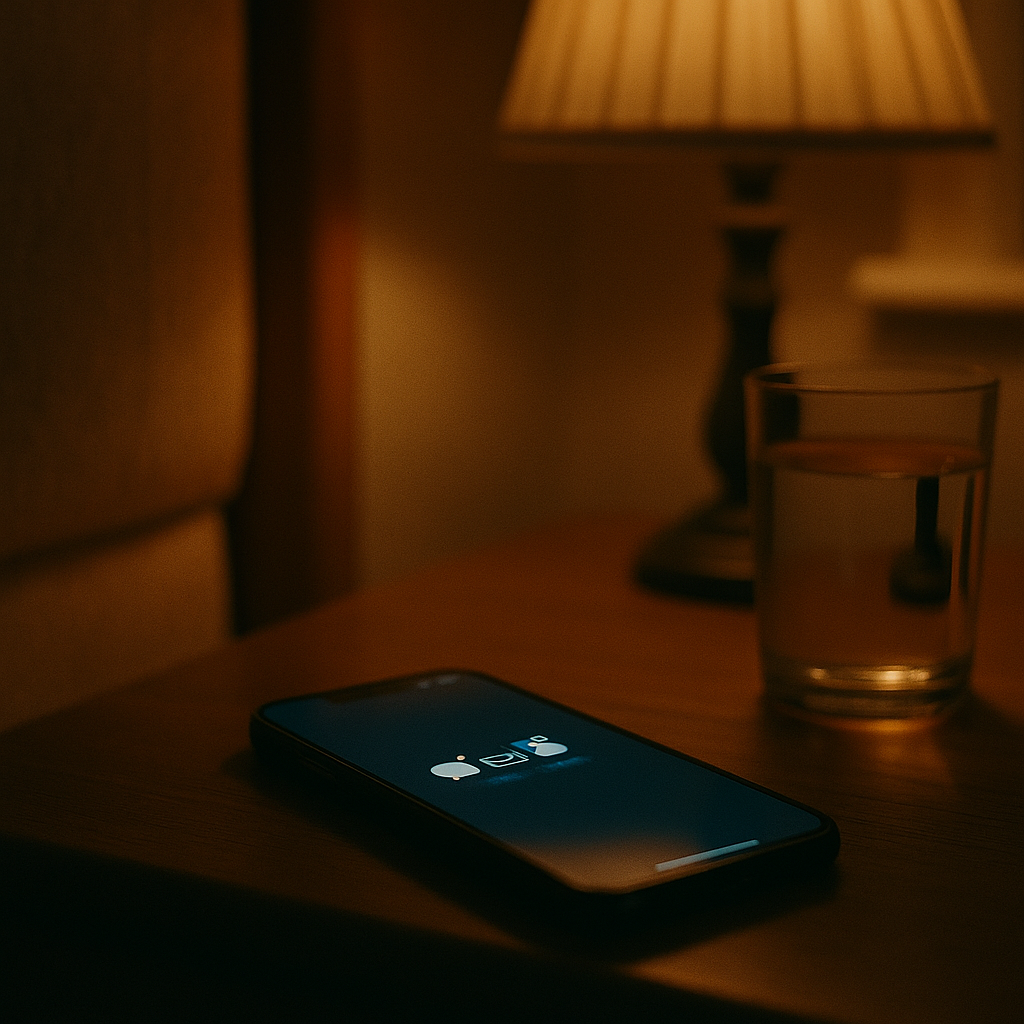
    Smartphone notifications on bedside table contributing to smartphone sleep disruption
    Smartphone notifications on bedside table contributing to smartphone sleep disruption

    Cortisol, Notifications, and the Threat Response

    Every notification your phone delivers is, at a neurological level, a potential threat signal. Your brain has to assess it: is this important? Do I need to act? Even if the answer is no, the assessment process costs something. It triggers a small spike in cortisol, the primary stress hormone, and cortisol and sleep are fundamentally incompatible in high quantities.

    Research published in the journal Sleep Medicine Reviews has found that higher evening smartphone use is associated with elevated sympathetic nervous system activity, meaning your body’s fight-or-flight system is partially engaged when it should be winding down. This is why people often report lying in bed feeling tired but wired. The fatigue is real. The inability to switch off is also real. Both things are true at once.

    Keeping your phone on the bedside table, even face-down and on silent, maintains a low-level anticipatory state. The brain knows the device is there. For many people, that knowledge alone is enough to produce lighter, more fragmented sleep.

    Sleep Architecture and the REM Problem

    Even when smartphone users do fall asleep, there’s evidence that sleep architecture is affected. REM sleep, the phase most associated with memory consolidation, emotional regulation, and cognitive recovery, tends to be reduced or delayed in people with high evening screen use.

    A study from King’s College London found that adolescents who used smartphones after lights-out had significantly reduced sleep duration and worse sleep quality than those who didn’t, even when controlling for total screen time during the day. The timing matters as much as the volume.

    Adults are not immune. The pattern of late-night phone use pushing back sleep onset by 30 to 45 minutes, compounded over a working week, creates what researchers call sleep debt. That debt doesn’t fully clear over a weekend. Cognitive performance, mood regulation, and metabolic function all take sustained hits.

    What Actually Helps: Practical Steps That Work

    Switching off completely is not realistic for most people, and it’s not necessary. What matters is creating firm boundaries around the specific window when smartphone sleep disruption does its damage.

    Set a hard cut-off 60 to 90 minutes before bed. Not a soft suggestion, a hard rule. Put the phone in another room if possible. The physical distance removes the temptation and the passive anticipatory stress.

    Turn off non-essential notifications entirely. Not just for the evening, permanently. Most notifications are not urgent. Your nervous system does not know that. Reducing the frequency reduces the cortisol spikes throughout the day, which lowers your overall arousal baseline by evening.

    Charge your phone outside the bedroom. This single habit change is probably the most impactful one. It removes the device from your sleep environment, breaks the conditioned association between bed and scrolling, and stops the impulse check at 03:00 when you stir between sleep cycles.

    Replace the pre-sleep phone habit with something genuinely low-stimulation. Reading physical print, light stretching, or even just sitting quietly works. The goal is to give your parasympathetic nervous system time to take over from the sympathetic state your phone was sustaining.

    Use your phone’s screen time or focus tools. Both iOS Screen Time and Android Digital Wellbeing allow you to schedule downtime, block specific apps, and set wind-down reminders. These tools are not perfect, but they introduce friction, and friction is often enough to break an automatic behaviour.

    The Bigger Picture

    Smartphone sleep disruption is not a willpower problem. The design of these devices works against sleep by intention: more engagement means more data, more ad revenue, more retention. Understanding the neurological mechanisms makes it easier to stop blaming yourself and start making structural changes instead.

    Sleep is not passive. It is an active, biologically complex process that your brain needs specific conditions to execute properly. Protect those conditions and most people find their sleep quality improves faster than they expect. The biology is straightforward once you stop treating the phone as neutral.

    Frequently Asked Questions

    Does blue light from phones really cause sleep problems?

    Blue light does suppress melatonin production, but it’s only one part of the problem. The dopamine-driven behavioural loops, cortisol spikes from notifications, and heightened nervous system arousal caused by evening phone use are equally significant contributors to poor sleep quality.

    How long before bed should I stop using my phone?

    Sleep researchers generally recommend stopping smartphone use 60 to 90 minutes before your intended sleep time. This gives your cortisol levels time to drop and allows the brain to begin transitioning from alert beta-wave activity toward the slower wave states needed for sleep onset.

    Does keeping my phone on silent next to the bed fix smartphone sleep disruption?

    Partially, but not fully. Keeping the phone in the bedroom still creates a low-level anticipatory state for many people, and checking it when you wake briefly during the night disrupts sleep cycles. Moving it to another room is the more effective solution.

    Can I use night mode or a blue light filter to reduce the sleep impact?

    Night mode reduces but does not eliminate the problem. Research from the University of Manchester suggests warm-toned light can still affect the brain’s circadian system through luminance levels. Reducing overall screen brightness and stopping use earlier is more reliably effective.

    How quickly will my sleep improve if I stop using my phone before bed?

    Many people notice improvements within a few days to a week of consistently removing their phone from the bedroom and stopping use 60 to 90 minutes before bed. Full recalibration of circadian rhythm disruption can take two to three weeks of consistent behaviour change.