
For most people in the UK, creatine still conjures images of gym bags and protein shakers. It is the supplement that serious lifters use, full stop. But that picture is changing, and the science behind it has been quietly expanding for years. Researchers are now looking at creatine supplementation through an entirely different lens: what it does to the brain, how it affects mood, and whether it might play a meaningful role in healthy ageing.

This is not fringe science. The evidence is accumulating in peer-reviewed journals, and it deserves a clear-headed look rather than either hype or dismissal. What does the research actually show? And what should a UK adult in their 40s, 50s, or beyond realistically expect from taking it?
What creatine actually does in the body
Creatine is a naturally occurring compound synthesised in the liver and kidneys from the amino acids arginine, glycine, and methionine. Around 95% of the body’s creatine is stored in skeletal muscle, but the remaining 5% is found in the brain, heart, and testes. The brain, it turns out, has a significant appetite for it.
Creatine’s job is energy recycling. It replenishes adenosine triphosphate (ATP), the molecule cells use as fuel, particularly during high-demand periods. In muscle, that means explosive effort. In the brain, it means sustained cognitive work, stress responses, and the metabolic demands that come with ageing. When dietary intake is low or the body’s synthesis is insufficient, creatine stores can dip, and that has consequences beyond the gym.
According to the NHS, most people get some creatine from red meat and fish, but vegetarians and vegans tend to have notably lower stores. That matters as the research develops, because baseline levels affect how much benefit supplementation delivers.
The cognitive function evidence: what studies are finding
The most compelling recent work focuses on creatine’s effect on the brain under conditions of stress or depletion. A 2023 meta-analysis published in Nutrition Reviews found that creatine supplementation improved performance on tasks requiring short-term memory and reasoning, particularly in older adults and in people who were sleep-deprived. The effect was modest but consistent.
A study from the University of Sydney, frequently cited in UK health coverage, demonstrated that a single large dose of creatine (equivalent to about four times the standard daily amount) measurably improved working memory in sleep-deprived participants within hours. Researchers attributed this to the brain’s increased energy demands when fatigued, and creatine’s ability to buffer that deficit.
Separate work has looked at vegetarians specifically, who show larger cognitive improvements from creatine supplementation than meat-eaters, likely because their baseline stores are lower to begin with. For vegans and vegetarians in the UK, this is a practically relevant finding, not just an academic one.
It is important to be honest about limitations here. Most cognitive studies have been relatively short-term, and sample sizes are sometimes small. The NHS does not currently recommend creatine for cognitive purposes, and the evidence is not yet strong enough to make sweeping claims. But the direction of research is consistent, and that consistency matters.
Creatine and depression: an emerging connection
Perhaps the most surprising strand of research involves creatine supplementation and mental health, specifically depression. Several studies have explored the idea that reduced brain energy metabolism plays a role in depressive episodes, and that creatine might help restore it.
A 2021 randomised controlled trial published in the Journal of Affective Disorders found that adding creatine to standard antidepressant treatment produced faster and more significant improvements in depressive symptoms compared to antidepressant treatment alone. The researchers proposed that creatine’s role in supporting mitochondrial energy production in neurons could explain the effect.
This does not mean creatine is a treatment for depression. It absolutely is not a replacement for professional support or prescribed medication. Anyone experiencing depression should speak with their GP. But the mechanism being studied is credible, and it opens up questions worth pursuing. Several larger trials are currently underway, and results over the next few years should clarify whether this is a genuine therapeutic avenue or an interesting but limited finding.
Ageing, muscle loss, and brain resilience
Sarcopenia, the gradual loss of muscle mass and strength that accelerates after 50, is one of the biggest functional health risks for older adults in the UK. Creatine’s role in supporting muscle here is well-established. But the ageing picture is more joined up than that.
Muscle and brain health are increasingly understood to be connected. Older adults who maintain physical strength tend to show better cognitive resilience. Research published in Experimental Gerontology has found that creatine combined with resistance training produced greater improvements in lean muscle mass and upper-body strength in adults over 55 than training alone. That is a practical benefit with downstream effects on independence and quality of life.
Meanwhile, some researchers are investigating whether creatine’s neuroprotective properties, specifically its ability to support mitochondrial function and reduce oxidative stress in neurons, might slow aspects of cognitive decline associated with normal ageing. The evidence here is still early, but the biological rationale is sound.
It is also worth noting that ageing adults typically have lower natural creatine synthesis, meaning supplementation may have more pronounced effects in this group than in younger, otherwise healthy individuals.
What to actually expect if you take it
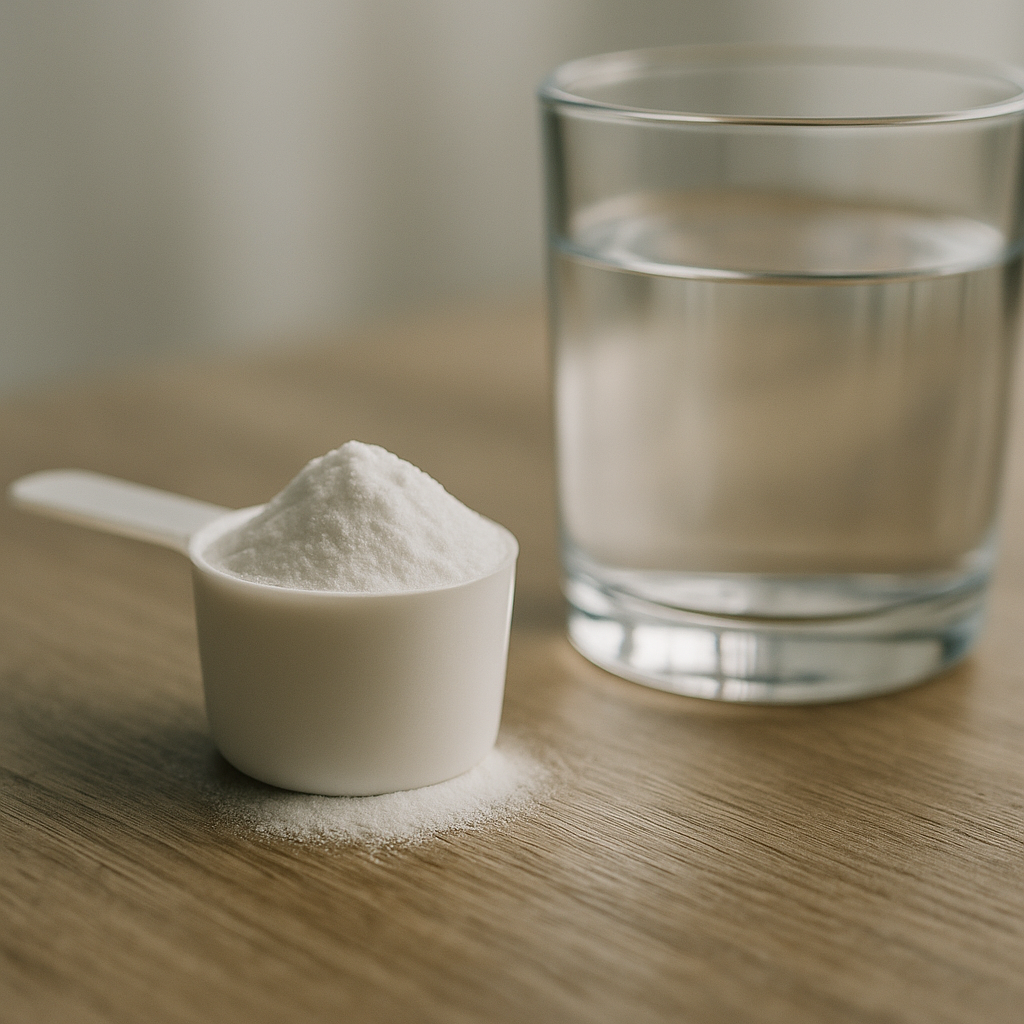
The standard supplementation protocol is 3 to 5 grams of creatine monohydrate daily. Loading phases (20 grams per day for five to seven days) saturate stores faster but are not essential and can cause digestive discomfort in some people. Creatine monohydrate is the most researched form; more expensive alternatives like creatine ethyl ester or buffered creatine have not been shown to outperform it.
Most people notice the physical effects within a few weeks. Cognitive effects, if they occur, tend to be more noticeable under conditions of stress, fatigue, or sleep deficit. If you are well-rested, well-nourished, and mentally sharp, you probably will not feel a dramatic shift. That does not mean nothing is happening at the cellular level.
Creatine is generally regarded as safe for healthy adults. It can cause water retention in muscle tissue during early use, which shows up as a slight increase in body weight. People with pre-existing kidney conditions should consult their GP before supplementing, as creatine increases creatinine (a metabolic byproduct) in the blood, which can complicate kidney function assessments. For healthy people, long-term use at standard doses has not been associated with kidney damage in the research literature.
If you are curious whether a tool like an AI Website Builder could help you set up a personal health tracking blog or wellness resource, that is one way some people are documenting their own supplementation journeys with more rigour than a note on their phone.
The honest bottom line
Creatine supplementation is one of the most researched compounds in sports nutrition, and the evidence base is now expanding well beyond the gym. The cognitive and mood-related findings are genuine and growing, even if they are not yet conclusive enough to make bold clinical claims. For older adults, vegetarians, or anyone dealing with chronic fatigue, the case for consideration is stronger than most people realise.
It is not a cure, and it is not a substitute for sleep, exercise, or professional mental health support. But it is cheap, well-tolerated, and backed by a body of research that deserves honest attention rather than the default assumption that it is only for people lifting heavy things.
Frequently Asked Questions
Can creatine supplementation really improve memory and focus?
Research suggests creatine can modestly improve short-term memory and reasoning, particularly in older adults and those who are sleep-deprived or have low baseline stores, such as vegetarians. The effect is not dramatic in well-rested, well-nourished individuals, but the evidence is consistent across multiple studies.
Is creatine safe for people over 50 to take long-term?
For healthy adults, long-term creatine monohydrate use at 3 to 5 grams per day has not been linked to harm in the research literature. However, anyone with pre-existing kidney conditions should consult their GP first, as creatine affects creatinine levels in the blood, which can complicate routine kidney function tests.
How much does creatine cost and where can you buy it in the UK?
Creatine monohydrate is one of the most affordable supplements available. A 500-gram tub, providing roughly three to four months of supply at 3 to 5 grams per day, typically costs between £10 and £20 from retailers such as Myprotein, Holland and Barrett, or Amazon UK. More expensive formulations are not supported by better evidence.
Does creatine help with depression or anxiety?
Some clinical trials have found that adding creatine to antidepressant treatment accelerates and deepens symptom improvement, potentially due to its role in brain energy metabolism. However, this is an emerging area of research and creatine is not a standalone treatment for depression or anxiety; anyone experiencing these conditions should speak with their GP.
Do vegetarians and vegans benefit more from creatine supplementation?
Yes, the evidence consistently shows larger improvements in vegetarians and vegans than in meat-eaters, because plant-based diets contain no dietary creatine, resulting in lower baseline muscle and brain stores. Supplementation therefore produces a more noticeable top-up effect in this group.