
Most people in Britain are not getting enough omega-3 fatty acids. That is not a scare headline; it is a consistent finding across dietary surveys. The National Diet and Nutrition Survey, published by the ONS and Public Health England, repeatedly shows that the average UK adult consumes well below the recommended 250–500mg of EPA and DHA per day. When the data is broken down by age, income bracket and geography, the picture gets worse rather than better. Omega-3 deficiency in the UK diet is quiet, widespread, and genuinely consequential for long-term health.

What Omega-3s Actually Do and Why the Gap Matters
EPA (eicosapentaenoic acid) and DHA (docosahexaenoic acid) are the two long-chain omega-3 fatty acids that most of the clinical research focuses on. They are central to cardiovascular function, brain development, inflammation regulation and eye health. The body cannot produce adequate amounts on its own, so dietary intake is everything.
The Scientific Advisory Committee on Nutrition (SACN) recommends that UK adults eat at least two portions of fish per week, one of which should be oily. That translates to roughly 450mg of combined EPA and DHA daily. According to the most recent NDNS data, fewer than 30% of UK adults hit that target. Amongst younger adults aged 19 to 34, the figures are even lower. The reasons are fairly predictable: fish is expensive, some people dislike the taste, and plant-based diets, which are growing in the UK, contain virtually no DHA or EPA in forms the body can efficiently use.
The Problem with Assuming ALA Is Enough
Plant foods like flaxseed, walnuts and chia seeds contain ALA (alpha-linolenic acid), which is technically an omega-3. Many people assume this covers the shortfall. It does not, at least not efficiently. Research published in the American Journal of Clinical Nutrition and reviewed by the British Nutrition Foundation indicates that the human body converts only around 5–10% of ALA into EPA, and less than 1% into DHA. If you are relying on a handful of walnuts to balance your omega-3 intake, you are working with a very inefficient conversion rate.
This is particularly relevant for the estimated 3.5 million vegans in the UK and the larger number following predominantly plant-based diets. For them, the omega-3 gap is not theoretical; it is near-certain without supplementation.
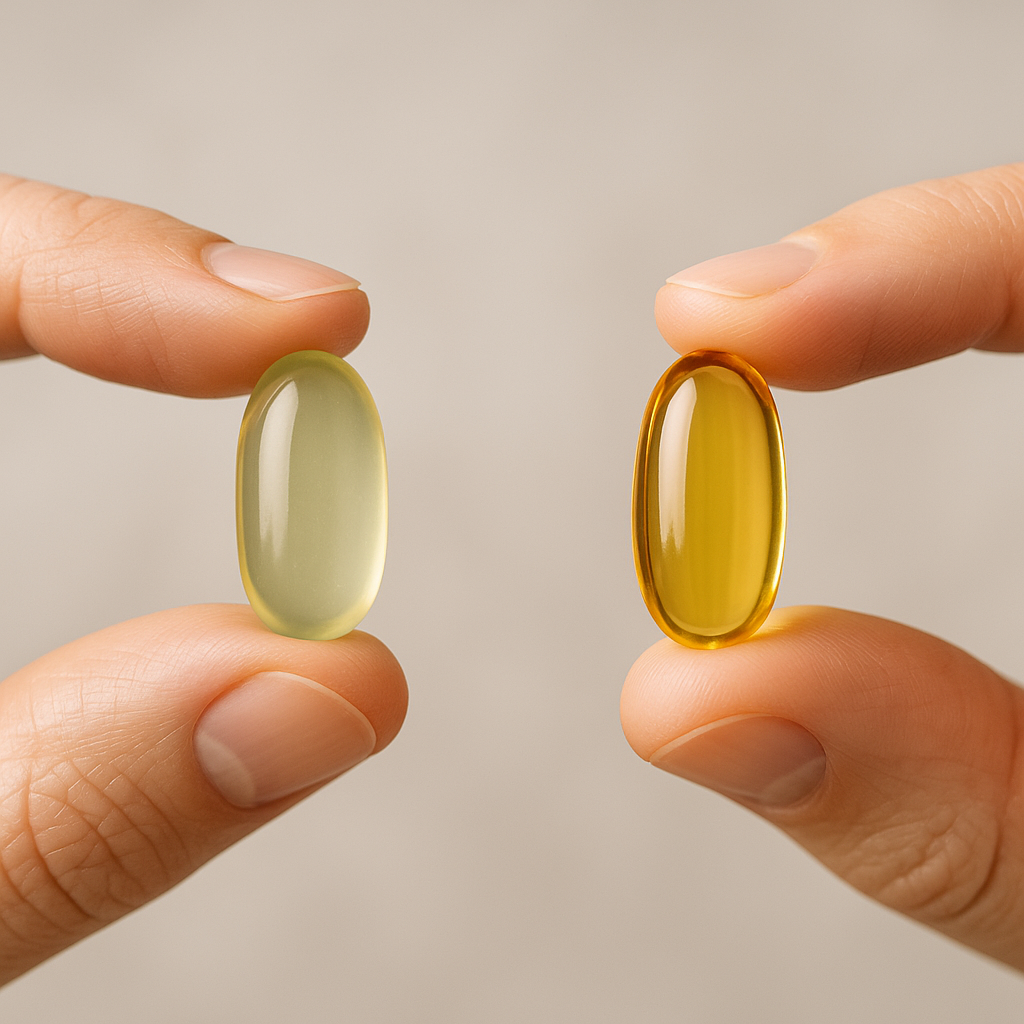
Fish Oil vs Algae Oil: What the Clinical Evidence Shows
Fish oil supplements are the most common intervention for omega-3 deficiency. They are widely available, relatively affordable, and backed by decades of clinical research. A 2019 meta-analysis published in the New England Journal of Medicine (the VITAL trial) found that omega-3 supplementation at 840mg per day reduced cardiovascular events in participants who did not regularly eat fish. The evidence for reducing triglycerides is particularly robust; the NHS now supports prescription-strength omega-3 for patients with hypertriglyceridaemia under specific clinical criteria.
Algae-based omega-3 supplements are a newer and growing category. They work by sourcing DHA and EPA from marine microalgae, which is, in fact, the original source that fish accumulate it from in the wild. Several peer-reviewed studies, including a 2014 trial in the Journal of Nutrition, have found that algae oil raises DHA levels in the blood as effectively as cooked salmon or fish oil supplements. Bioavailability appears comparable.
What algae oil offers beyond equivalence is the absence of concerns about heavy metal accumulation, oceanic pollutants like PCBs, and the ethical issues around fish sourcing. Quality fish oil is processed to remove contaminants, but algae oil sidesteps the problem entirely because it is farmed in controlled environments, not extracted from wild-caught fish.
The Sustainability Question for British Consumers
Britain has a complicated relationship with its fisheries. Post-Brexit quota arrangements, declining North Sea stocks and increasing consumer awareness about overfishing all add pressure to the question of whether oily fish is a sustainable answer to the UK’s omega-3 gap at scale. The Marine Stewardship Council (MSC) certifies sustainably caught fish, and that certification is genuinely meaningful, but certified oily fish such as mackerel, sardines and herring are not always what people reach for.
Algae-based supplements require significantly less water and produce fewer emissions per gram of DHA than fish oil production. For consumers who care about environmental impact alongside personal health, this matters. UK-based supplement brands have begun offering algae oil capsules at price points that are becoming increasingly competitive with standard fish oil, though they are still typically 20–40% more expensive.
If cost is a barrier, eating oily fish directly remains the most efficient and affordable route to correcting omega-3 deficiency in the UK diet. Tinned mackerel, sardines and pilchards from MSC-certified sources are cheap, widely available in UK supermarkets, and nutritionally effective. A 100g serving of tinned mackerel can deliver over 2g of combined EPA and DHA.
What to Look for in a Supplement
Not all omega-3 supplements are created equal. Key things to check when buying in the UK:
- Combined EPA and DHA content: Look at the actual EPA and DHA milligrams on the label, not just the total fish oil volume. A 1000mg capsule might contain as little as 300mg of combined omega-3s.
- Form: Triglyceride form is absorbed more efficiently than ethyl ester form, though both are sold widely. Algae oils typically come in triglyceride or phospholipid form.
- Third-party testing: Look for IFOS (International Fish Oil Standards) certification or equivalent. This verifies purity and potency.
- Dose: For general health maintenance, 250–500mg of combined EPA and DHA daily is the standard target. Therapeutic doses for specific conditions should be discussed with a GP or registered dietitian.
The NHS provides guidance on fish consumption and omega-3 intake, which is a useful starting point for anyone uncertain about where they stand. You can find their current guidance at nhs.uk.
The Honest Bottom Line
Omega-3 deficiency in the UK diet is real, measurable and fixable. If you eat oily fish twice a week, you are likely covering your needs without supplements. If you do not, whether for taste, cost, or dietary choice, a supplement is a genuinely practical solution. Fish oil and algae oil both work. Algae oil has the edge on sustainability and is the only viable option for vegans. Fish oil is cheaper and has a longer clinical track record, though the evidence gap between the two is narrowing.
The key is actually doing something about it rather than assuming a flaxseed here and there has the problem sorted. It almost certainly does not.
Frequently Asked Questions
How common is omega-3 deficiency in the UK?
Very common. The National Diet and Nutrition Survey consistently shows that fewer than 30% of UK adults meet the recommended intake of EPA and DHA. People following plant-based diets are at particularly high risk because plant foods contain little usable long-chain omega-3.
Is algae oil as effective as fish oil for omega-3?
Yes, according to current clinical evidence. Studies including a 2014 trial in the Journal of Nutrition found algae oil raised blood DHA levels comparably to fish or fish oil. Since fish accumulate omega-3 by eating algae, the source is biologically equivalent.
Can I get enough omega-3 from flaxseeds and walnuts?
Unlikely in practice. These plant foods contain ALA, a short-chain omega-3, but the body converts only around 5–10% of it into EPA and less than 1% into DHA. For people avoiding fish and fish oil, a direct DHA/EPA supplement from algae is a far more reliable option.
How much omega-3 should I take daily as a supplement?
For general health, 250–500mg of combined EPA and DHA per day is the widely cited target, aligned with SACN guidance. Therapeutic doses for specific conditions like high triglycerides can be higher, but these should be discussed with your GP rather than self-prescribed.
Are fish oil supplements safe and do they contain mercury?
Quality fish oil supplements sold in the UK are processed to remove contaminants including mercury and PCBs. Look for products with IFOS certification or equivalent third-party testing. Algae oil avoids the issue entirely as it is produced in controlled environments without wild fish.