
The question of how much protein do I need daily is one of the most searched nutrition queries online, and the answers vary wildly depending on who you ask. Fitness influencers push extreme numbers. Conservative health bodies set targets that researchers now consider too low. And most people are left somewhere in the middle, unsure whether they are eating enough or far too much. This guide cuts through that noise with numbers that have genuine research behind them.
Protein is not a trend. It is a fundamental macronutrient responsible for building and repairing tissue, producing enzymes and hormones, supporting immune function, and maintaining muscle mass throughout life. Getting it wrong, in either direction, carries real consequences.

The Baseline: What Official Guidelines Actually Say
The UK Reference Nutrient Intake (RNI) for protein, as set by the British Dietetic Association, sits at 0.75 grams per kilogram of body weight per day for the average healthy adult. For a 70 kg person, that works out to roughly 53 grams daily. This figure is designed to prevent deficiency, not to optimise health or performance. It is a floor, not a ceiling.
A landmark review published in the British Journal of Sports Medicine, alongside multiple meta-analyses in the American Journal of Clinical Nutrition, consistently suggests that 1.2 to 1.6 grams per kilogram of body weight is a more appropriate target for most active adults seeking to maintain or improve their body composition. That same 70 kg person would benefit from somewhere between 84 and 112 grams per day under this framework.
How Much Protein Do You Need If You Strength Train?
For people who lift weights or engage in regular resistance training, the evidence supports a higher range. Research published in the Journal of the International Society of Sports Nutrition points to 1.6 to 2.2 grams per kilogram as the effective range for maximising muscle protein synthesis. Beyond that upper limit, additional protein does not appear to produce further muscle gain in most people; it simply gets oxidised for energy.
Timing matters here too. Studies indicate that spreading protein intake across three to four meals, each containing 25 to 40 grams, produces a better anabolic response than front-loading or back-loading most of your intake into one or two sittings. The leucine content of each meal is particularly important; leucine is the amino acid most directly responsible for triggering muscle protein synthesis, and sources such as chicken, eggs, dairy, and soy deliver it in meaningful quantities.
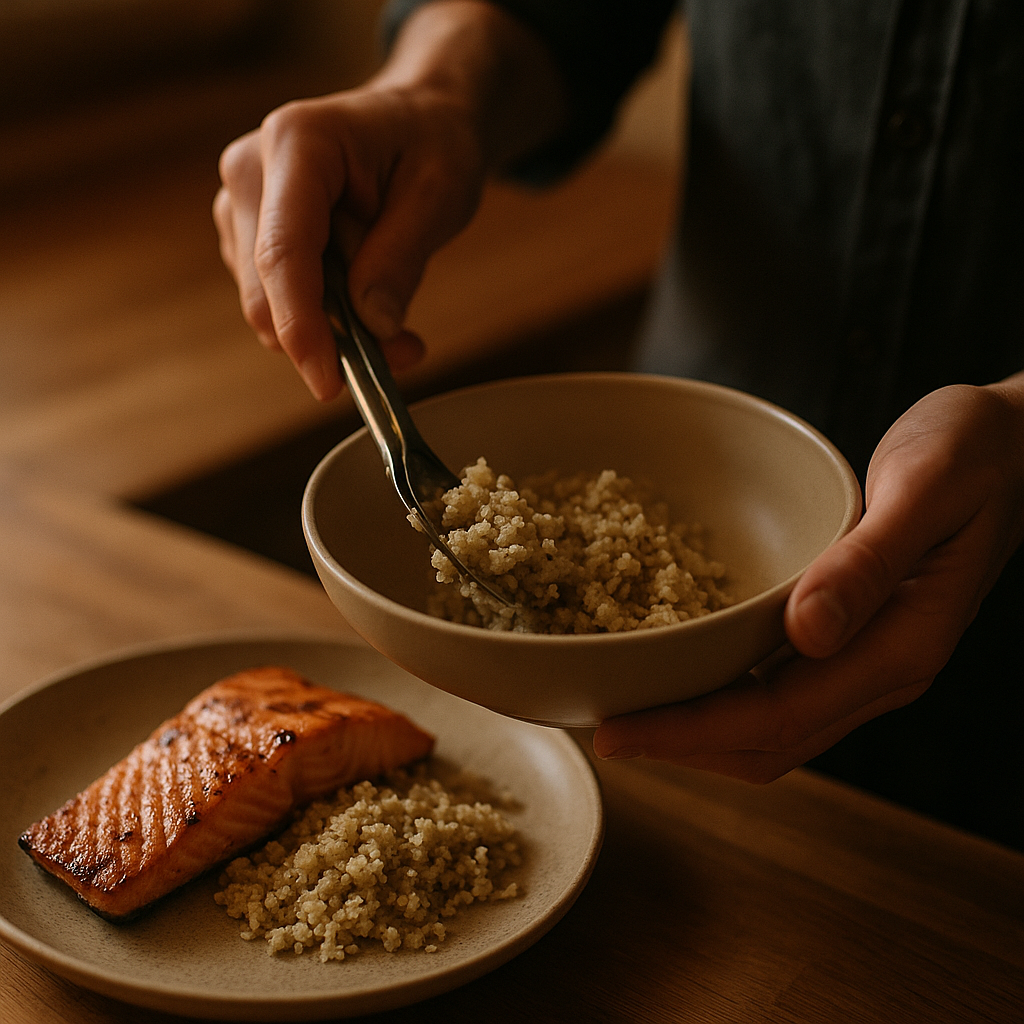
Protein Needs for Older Adults: Why the Numbers Go Up
Ageing changes the equation significantly. A condition called anabolic resistance means that older muscle tissue is less sensitive to the same protein stimulus that would trigger synthesis in a younger person. Research from Maastricht University and published in the journal Clinical Nutrition suggests that adults over 65 benefit from 1.2 to 1.6 grams per kilogram per day at minimum, with some evidence supporting higher intakes of up to 2.0 grams for those who are frail or recovering from illness.
Sarcopenia, the age-related loss of muscle mass, is a serious health concern. The European Society for Clinical Nutrition and Metabolism (ESPEN) formally recommends protein intakes of at least 1.0 to 1.2 grams per kilogram for healthy older adults, rising to 1.2 to 1.5 grams for those with acute or chronic illness. These are not aggressive numbers; they are what the research supports for maintaining functional independence as people age.
Older adults also tend to absorb and utilise protein less efficiently from digestion, which strengthens the case for slightly larger individual portions (around 35 to 40 grams per meal) rather than smaller, more frequent servings.
If You Are Sedentary, Do You Still Need More Than the RNI?
Probably yes, though the gap narrows. A sedentary adult with no health conditions may be adequately served by 0.8 to 1.0 grams per kilogram, slightly above the UK RNI. That provides enough for daily tissue repair, immune support, and satiety without excess. However, research from the University of Stirling and other institutions suggests even sedentary older adults are better protected against muscle loss and metabolic decline when consuming closer to 1.2 grams per kilogram.
Higher protein intake also supports satiety. Studies in the journal Obesity Reviews found that protein has a greater thermic effect than carbohydrate or fat, meaning the body uses more energy to process it. For sedentary individuals managing weight, increasing protein while keeping total calories stable can be a straightforward strategy with consistent support in the literature.
Practical Ways to Hit Your Target
Working out how much protein do I need daily is the first step; actually meeting that target is where most people struggle. A few practical anchors help. A 150g chicken breast contains around 45 grams of protein. Three large eggs deliver roughly 18 grams. A 200g serving of Greek yoghurt provides approximately 20 grams. A portion of cooked lentils (200g) offers around 18 grams for those following plant-based diets.
Plant proteins can absolutely meet daily requirements, but require more planning. Combining sources such as legumes, tofu, tempeh, edamame, and quinoa throughout the day ensures full amino acid coverage. The International Society of Sports Nutrition confirmed in its position stand that total daily protein intake matters more than any single source, provided variety is present.
When to Be Cautious
High protein intake is safe for most healthy adults, but individuals with pre-existing kidney disease should consult a clinician before significantly increasing intake. The NHS advises that people with chronic kidney disease may need to restrict protein, as the kidneys are responsible for processing its metabolic byproducts. This is not a concern for healthy kidneys, but it is worth noting for anyone with a diagnosed condition.
The take-home is straightforward. The standard RNI protects against deficiency; it does not define what is optimal. Most people, regardless of age or activity level, benefit from aiming higher, being consistent across meals, and choosing quality sources that deliver the full spectrum of essential amino acids.
Frequently Asked Questions
How much protein do I need daily to build muscle?
For muscle building, the research consistently supports 1.6 to 2.2 grams of protein per kilogram of body weight per day. For a 75 kg person, that means roughly 120 to 165 grams daily. Spreading this across three to four meals, each containing 25 to 40 grams, helps maximise muscle protein synthesis according to the Journal of the International Society of Sports Nutrition.
Is 50 grams of protein a day enough?
For most adults, 50 grams per day is likely below the optimal threshold. The UK RNI is 0.75g per kilogram, which puts a 70 kg adult at around 53 grams, but this is the minimum to avoid deficiency, not the target for good health. Research from the British Journal of Sports Medicine suggests 1.2 to 1.6 grams per kilogram is more appropriate for most people, meaning 50 grams is likely insufficient unless you are quite small or entirely sedentary.
Do older people need more protein than younger adults?
Yes. Due to a process called anabolic resistance, older muscle tissue responds less efficiently to protein, requiring higher intake to achieve the same effect. The European Society for Clinical Nutrition and Metabolism (ESPEN) recommends at least 1.0 to 1.2 grams per kilogram daily for healthy older adults over 65, rising to 1.2 to 1.5 grams for those with illness or frailty.
Can you get enough protein on a plant-based diet?
Yes, but it requires planning. Plant-based sources like tofu, tempeh, lentils, edamame, and quinoa can cover daily protein needs, but no single plant food contains the complete amino acid profile that animal proteins provide. The International Society of Sports Nutrition confirms that total daily intake matters most, provided you eat a variety of complementary plant proteins throughout the day.
Is too much protein bad for your kidneys?
For healthy adults with no pre-existing kidney conditions, high protein intake has not been shown to cause kidney damage, according to research reviewed in the Journal of Nutrition and Metabolism. However, the NHS advises that individuals already living with chronic kidney disease should consult a doctor before increasing protein intake, as impaired kidneys may struggle to process the metabolic byproducts of protein metabolism.