The average UK adult now spends roughly nine hours a day looking at screens, according to data from Ofcom’s Adults’ Media Use and Attitudes report. That includes work, leisure, and everything in between. The instinctive response is to declare a “digital detox” and go phone-free for a weekend. It feels virtuous. It rarely sticks. A more honest conversation centres on building healthy screen time habits adults can actually maintain, without pretending we can simply opt out of a world that runs on connectivity.
Why the All-or-Nothing Approach Tends to Fail
Cold-turkey breaks from screens sound appealing, but the research is mixed on whether they produce lasting change. A 2023 study published in PLOS ONE found that short digital detoxes often produced a rebound effect, with people increasing usage in the days immediately following a break. The underlying habits, the reflexive phone-checking, the doom-scrolling before bed, remained untouched.
The problem is not screens themselves. It is the absence of intentional choices about when, how, and why we use them. Passive consumption of social media at 11pm is physiologically and psychologically very different from a video call with a friend or a focused hour of deep work. Treating all screen time as equivalent is where most advice goes wrong.
What Excessive Screen Use Actually Does to Mental Health
There is now a reasonably solid body of evidence linking passive social media use to increased symptoms of anxiety and depression in adults. A systematic review published in the BMJ Open in 2022 found associations between high social media use and poorer sleep quality, lower mood, and reduced life satisfaction, particularly in the 18-35 age group.
Sleep disruption is a large part of the story. Exposure to blue light from screens suppresses melatonin production, delaying the onset of sleep. The NHS advises avoiding screens for at least an hour before bed, and the science backs that up clearly. Poor sleep compounds everything else: concentration, mood regulation, immune function, metabolic health. This is not about being precious. It is a legitimate physiological chain reaction.
Cognitive fragmentation is another underappreciated effect. Every notification interrupts a thought process. Research from the University of California found it takes an average of 23 minutes to fully regain focus after an interruption. Multiply that across a working day and the cumulative cost to productivity and mental clarity becomes significant.
Practical Healthy Screen Time Habits Adults Can Start This Week
The goal here is not abstinence. It is intentionality. These are evidence-informed adjustments, not punishments.
Define your no-screen windows
The most consistently effective habit is to designate specific times when screens are simply off. The hour before sleep is the most impactful. So is the first 30 minutes after waking, when cortisol levels are naturally elevated and the brain is at its most receptive to deep thought. Starting the day with a notification feed sets a reactive, fractured tone for hours afterwards.
Separate work screens from leisure screens
If you work from home, this matters more than ever. Using the same device, in the same room, for both Teams meetings and late-night television trains your brain to associate that screen with both effort and rest, making genuine relaxation harder. Even a simple physical separation, laptop closed on the desk, phone on charge in another room, sends clear signals.
Audit what you are actually consuming
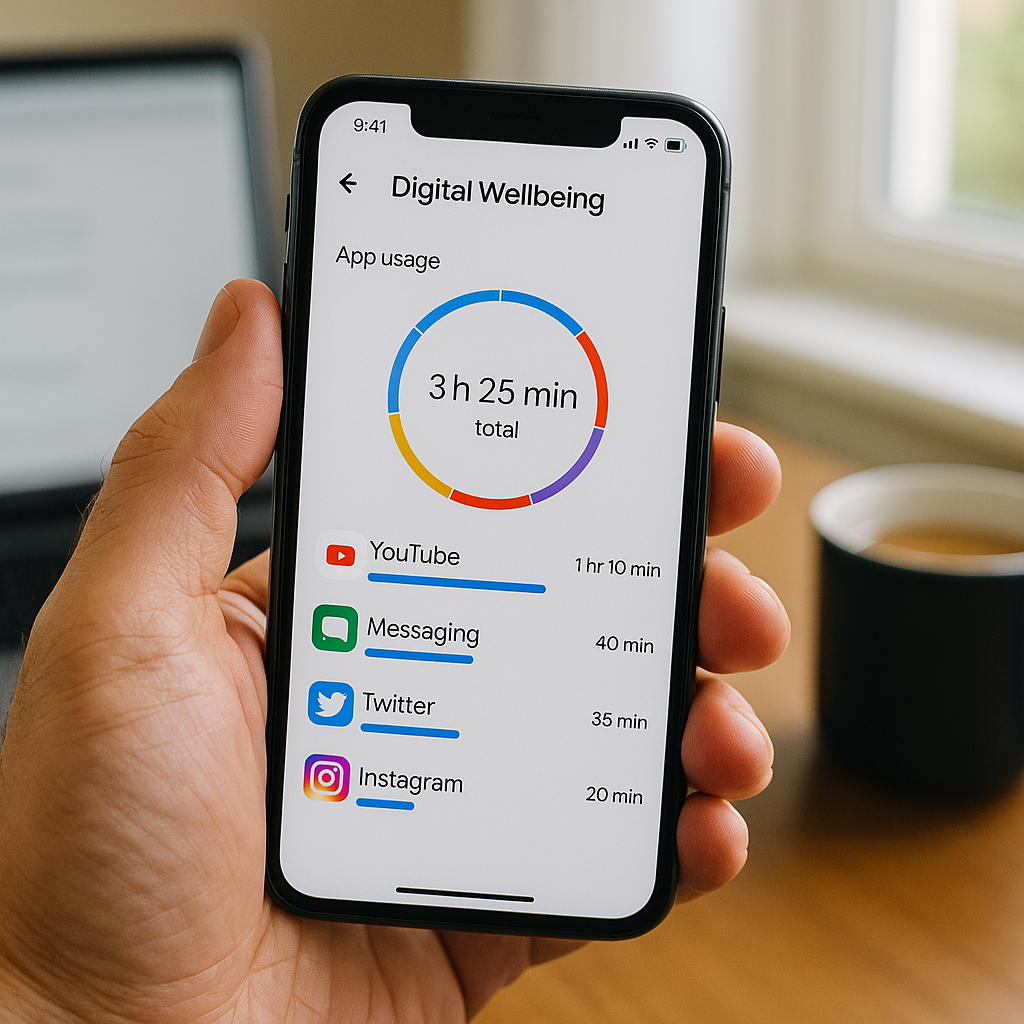
Most people dramatically underestimate passive screen use. iOS Screen Time and Android Digital Wellbeing both provide weekly breakdowns. Spend five minutes reviewing yours. Not to feel guilty, but to make informed choices. If you are spending two hours a day on a platform that leaves you feeling worse, that is useful data.
Replace, do not just remove
Telling yourself to “use your phone less” without replacing that behaviour with something else almost always fails. The itch does not disappear. Replace evening scroll time with something that uses your hands: cooking, reading a physical book, a short walk. The substitution approach is consistently better supported by habit research than pure restriction.
Use technology to manage technology
This sounds circular but it works. Focus modes on iPhones and Android devices, app timers, and greyscale display settings all reduce the compulsive pull of screens without requiring willpower every time. Grayscale mode in particular reduces the visual reward of notifications and has been shown in several small studies to reduce compulsive phone-checking. It takes about 30 seconds to activate in your display settings.
The Workplace Dimension Most Guides Ignore
A significant chunk of adult screen time is not optional. Office workers in the UK spend an average of six to seven hours per day at a computer, and many are now managing communications across three or more platforms simultaneously. Teams, Slack, email, and a browser with multiple tabs open is the modern working environment for millions of people.
Here, micro-habits matter more than grand resets. Closing email for a 90-minute focused work block, turning off non-urgent notification sounds during deep work, and scheduling specific times to check messages rather than responding reactively, these are strategies endorsed by occupational health bodies and they are genuinely achievable without permission from your employer.
Healthy screen time habits adults need at work are different from those at home, but the underlying principle is the same: intentional use beats constant availability.
Children and Screen Time: Why Your Habits Matter More Than You Think
If you have children in the house, your own screen behaviour sets the baseline expectation. NHS guidance recommends that children under two avoid screens almost entirely, and that older children have structured, time-limited use. But children model adult behaviour closely. Research consistently shows that parents who check their phones frequently at mealtimes or during conversations raise children who regard that as normal and acceptable.
This is not a judgement. It is an incentive. Building your own healthier screen habits has a downstream effect on the whole household.
When to Seek More Support
For most people, screen overuse is a habit problem, not a clinical one. But compulsive phone use that causes genuine distress, interferes with relationships, or feels genuinely uncontrollable may warrant a conversation with a GP. Behavioural addictions are increasingly recognised by clinicians, and cognitive behavioural therapy (CBT) has good evidence for compulsive internet use. The NHS Long Term Plan includes expanded access to digital mental health support, which is worth exploring if habits feel beyond self-management.
The honest takeaway is this: screens are not going away, and treating every hour on a device as harmful misses the point. The question is whether your screen use is serving you or draining you. Small, consistent adjustments to how and when you engage with technology will do more for your wellbeing than any weekend detox ever could.
Frequently Asked Questions
How many hours of screen time is healthy for adults per day?
There is no universal limit, but most health professionals focus on quality and context rather than total hours. Passive social media scrolling has more negative associations with mood and sleep than purposeful work or video calls. If your screen use is affecting your sleep, focus, or mental health, that is a more useful signal than raw hours.
Does blue light from screens actually damage your eyes or sleep?
The evidence on eye damage from blue light is currently weak, but the sleep disruption effect is well-supported. Blue light suppresses melatonin production, which delays sleep onset. The NHS recommends avoiding screens for at least an hour before bed to protect sleep quality.
What is the best app for tracking and reducing screen time on Android or iPhone?
Both Android Digital Wellbeing and Apple Screen Time are built-in and free. They provide detailed breakdowns by app and allow you to set daily limits. Third-party options like Freedom or Opal offer more granular controls for blocking distracting apps during set periods.
Can screen time cause anxiety or depression in adults?
High levels of passive social media use in particular have been consistently linked to increased anxiety and lower mood in adult populations, based on multiple peer-reviewed reviews including studies published in BMJ Open. Active, intentional screen use such as video calling friends shows far weaker negative associations.
How do you reduce screen time when your job requires a computer all day?
Focus on reducing optional and passive use outside work hours rather than total hours. Practical steps include keeping your phone out of the bedroom, disabling non-essential notifications after a set time in the evening, and scheduling specific windows to check email rather than responding reactively throughout the day.