Most people have heard the blue light warning. Put your phone down before bed, get a blue light filter, maybe buy some orange-tinted glasses. It’s become standard advice, almost background noise. But smartphone sleep disruption runs considerably deeper than the light coming off your screen, and understanding why matters if you actually want to fix it.
The mechanisms at work are neurological, hormonal, and behavioural. Some of them kick in before you’ve even opened an app.
What Blue Light Actually Does (And What It Doesn’t Explain)
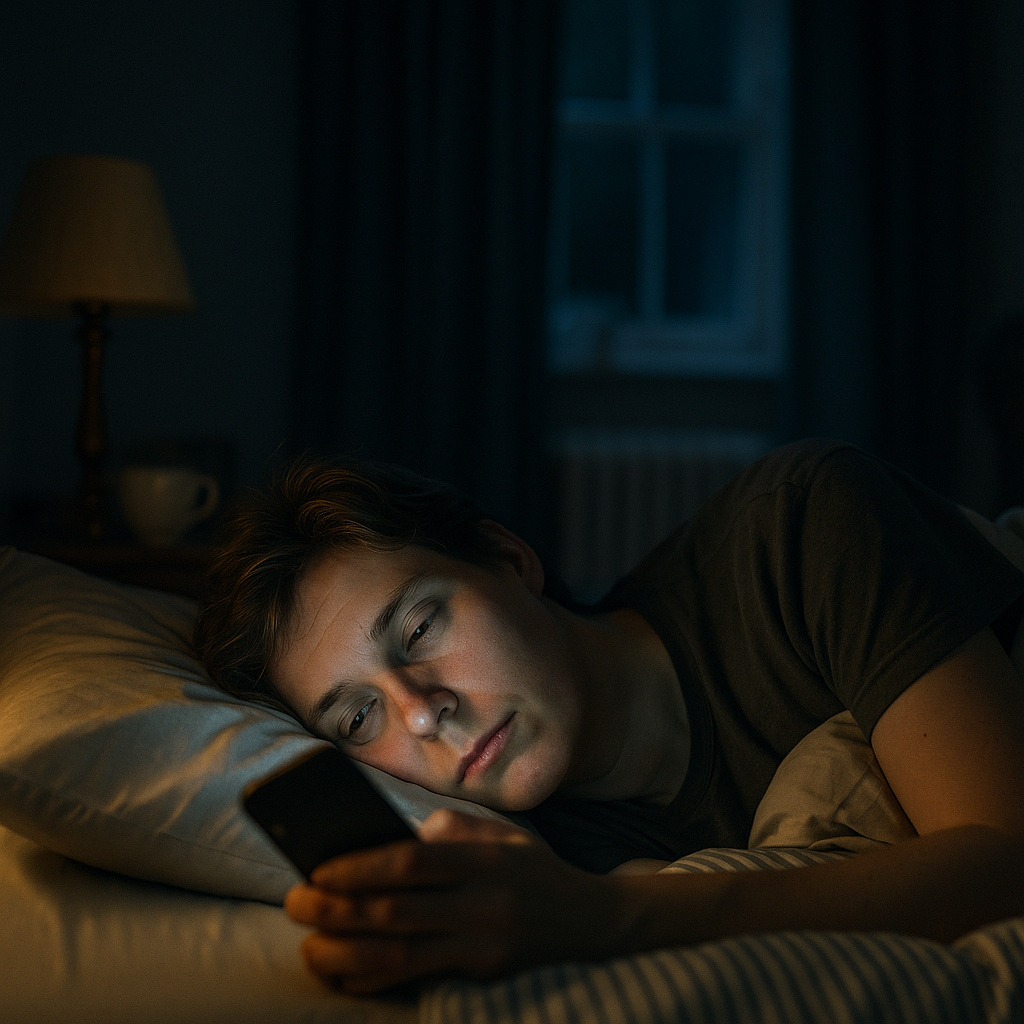
Blue light is real. Short-wavelength light in the 460–480 nm range suppresses melatonin production by activating intrinsically photosensitive retinal ganglion cells (ipRGCs), which feed directly into the suprachiasmatic nucleus in the hypothalamus. This is your body’s master clock. Disrupting it shifts your circadian rhythm later, making it harder to fall asleep and harder to wake up feeling rested.
According to the NHS Every Mind Matters resource on sleep, poor sleep is linked to increased risk of anxiety, depression, and reduced immune function. The ripple effects are not trivial.
But here’s the thing: blue light filters and night mode settings reduce the problem modestly at best. Research from the University of Manchester suggests the warm-toned light emitted by night mode may actually still interfere with sleep onset because the brain’s circadian photoreceptors are sensitive to luminance levels, not just colour temperature. The bigger problems are happening elsewhere.
The Dopamine Loop Nobody Talks About
Your smartphone is a variable reward machine. Social media feeds, messaging apps, news notifications. each delivers unpredictable micro-doses of novelty. Novelty triggers dopamine release in the nucleus accumbens. Dopamine creates anticipation, not satisfaction, which means you keep scrolling to get the next hit.
This state of heightened arousal is the opposite of what the brain needs to transition into sleep. Sleep onset requires a drop in core body temperature, a reduction in cortisol, and a gradual shift in brain activity from beta waves (alert, focused) to alpha and then theta waves. Scrolling through your phone at 23:00 actively prevents this transition. Your nervous system is in a mild but persistent state of activation.
The problem compounds because this loop is habitual. Many people reach for their phone within minutes of waking and within minutes of getting into bed. The bedroom itself becomes conditioned as a place of stimulation rather than rest, which is a well-documented issue in sleep medicine known as stimulus control failure.
Cortisol, Notifications, and the Threat Response
Every notification your phone delivers is, at a neurological level, a potential threat signal. Your brain has to assess it: is this important? Do I need to act? Even if the answer is no, the assessment process costs something. It triggers a small spike in cortisol, the primary stress hormone, and cortisol and sleep are fundamentally incompatible in high quantities.
Research published in the journal Sleep Medicine Reviews has found that higher evening smartphone use is associated with elevated sympathetic nervous system activity, meaning your body’s fight-or-flight system is partially engaged when it should be winding down. This is why people often report lying in bed feeling tired but wired. The fatigue is real. The inability to switch off is also real. Both things are true at once.
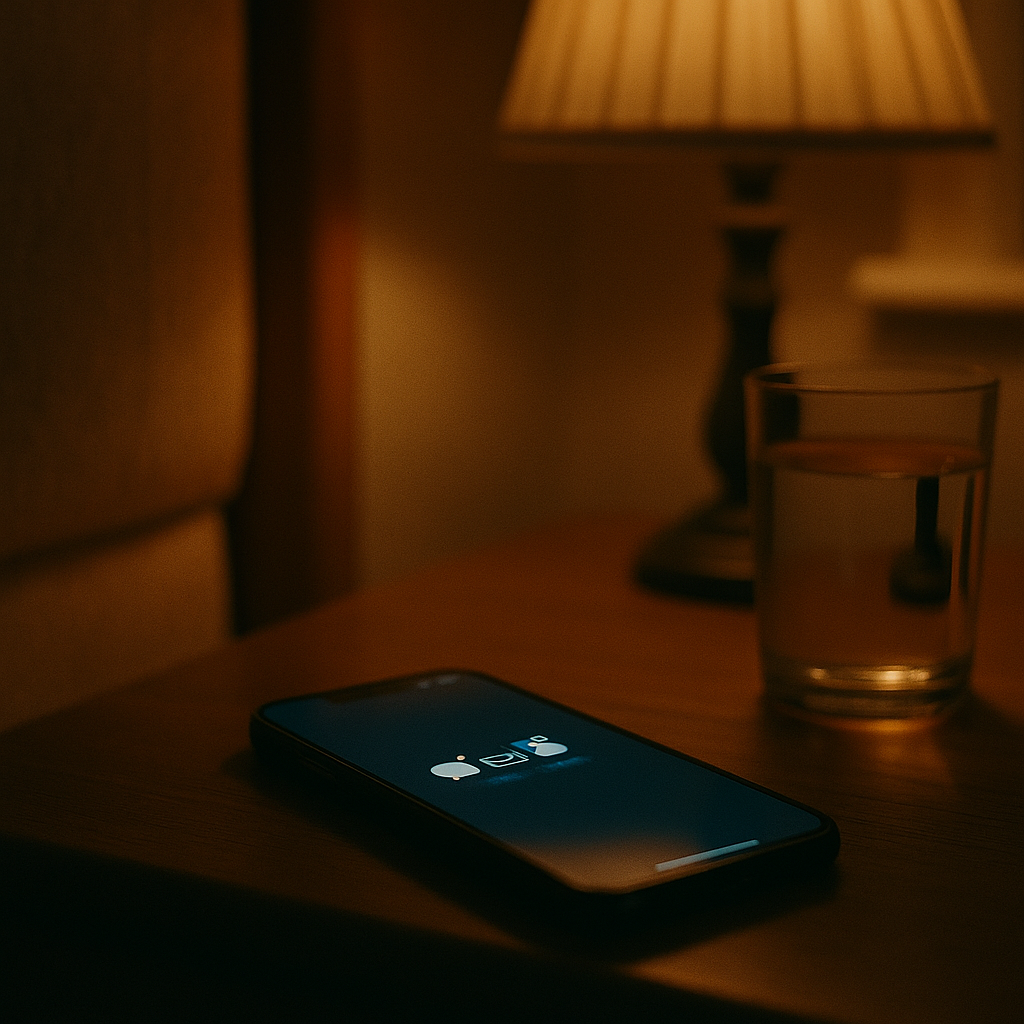
Keeping your phone on the bedside table, even face-down and on silent, maintains a low-level anticipatory state. The brain knows the device is there. For many people, that knowledge alone is enough to produce lighter, more fragmented sleep.
Sleep Architecture and the REM Problem
Even when smartphone users do fall asleep, there’s evidence that sleep architecture is affected. REM sleep, the phase most associated with memory consolidation, emotional regulation, and cognitive recovery, tends to be reduced or delayed in people with high evening screen use.
A study from King’s College London found that adolescents who used smartphones after lights-out had significantly reduced sleep duration and worse sleep quality than those who didn’t, even when controlling for total screen time during the day. The timing matters as much as the volume.
Adults are not immune. The pattern of late-night phone use pushing back sleep onset by 30 to 45 minutes, compounded over a working week, creates what researchers call sleep debt. That debt doesn’t fully clear over a weekend. Cognitive performance, mood regulation, and metabolic function all take sustained hits.
What Actually Helps: Practical Steps That Work
Switching off completely is not realistic for most people, and it’s not necessary. What matters is creating firm boundaries around the specific window when smartphone sleep disruption does its damage.
Set a hard cut-off 60 to 90 minutes before bed. Not a soft suggestion, a hard rule. Put the phone in another room if possible. The physical distance removes the temptation and the passive anticipatory stress.
Turn off non-essential notifications entirely. Not just for the evening, permanently. Most notifications are not urgent. Your nervous system does not know that. Reducing the frequency reduces the cortisol spikes throughout the day, which lowers your overall arousal baseline by evening.
Charge your phone outside the bedroom. This single habit change is probably the most impactful one. It removes the device from your sleep environment, breaks the conditioned association between bed and scrolling, and stops the impulse check at 03:00 when you stir between sleep cycles.
Replace the pre-sleep phone habit with something genuinely low-stimulation. Reading physical print, light stretching, or even just sitting quietly works. The goal is to give your parasympathetic nervous system time to take over from the sympathetic state your phone was sustaining.
Use your phone’s screen time or focus tools. Both iOS Screen Time and Android Digital Wellbeing allow you to schedule downtime, block specific apps, and set wind-down reminders. These tools are not perfect, but they introduce friction, and friction is often enough to break an automatic behaviour.
The Bigger Picture
Smartphone sleep disruption is not a willpower problem. The design of these devices works against sleep by intention: more engagement means more data, more ad revenue, more retention. Understanding the neurological mechanisms makes it easier to stop blaming yourself and start making structural changes instead.
Sleep is not passive. It is an active, biologically complex process that your brain needs specific conditions to execute properly. Protect those conditions and most people find their sleep quality improves faster than they expect. The biology is straightforward once you stop treating the phone as neutral.
Frequently Asked Questions
Does blue light from phones really cause sleep problems?
Blue light does suppress melatonin production, but it’s only one part of the problem. The dopamine-driven behavioural loops, cortisol spikes from notifications, and heightened nervous system arousal caused by evening phone use are equally significant contributors to poor sleep quality.
How long before bed should I stop using my phone?
Sleep researchers generally recommend stopping smartphone use 60 to 90 minutes before your intended sleep time. This gives your cortisol levels time to drop and allows the brain to begin transitioning from alert beta-wave activity toward the slower wave states needed for sleep onset.
Does keeping my phone on silent next to the bed fix smartphone sleep disruption?
Partially, but not fully. Keeping the phone in the bedroom still creates a low-level anticipatory state for many people, and checking it when you wake briefly during the night disrupts sleep cycles. Moving it to another room is the more effective solution.
Can I use night mode or a blue light filter to reduce the sleep impact?
Night mode reduces but does not eliminate the problem. Research from the University of Manchester suggests warm-toned light can still affect the brain’s circadian system through luminance levels. Reducing overall screen brightness and stopping use earlier is more reliably effective.
How quickly will my sleep improve if I stop using my phone before bed?
Many people notice improvements within a few days to a week of consistently removing their phone from the bedroom and stopping use 60 to 90 minutes before bed. Full recalibration of circadian rhythm disruption can take two to three weeks of consistent behaviour change.